
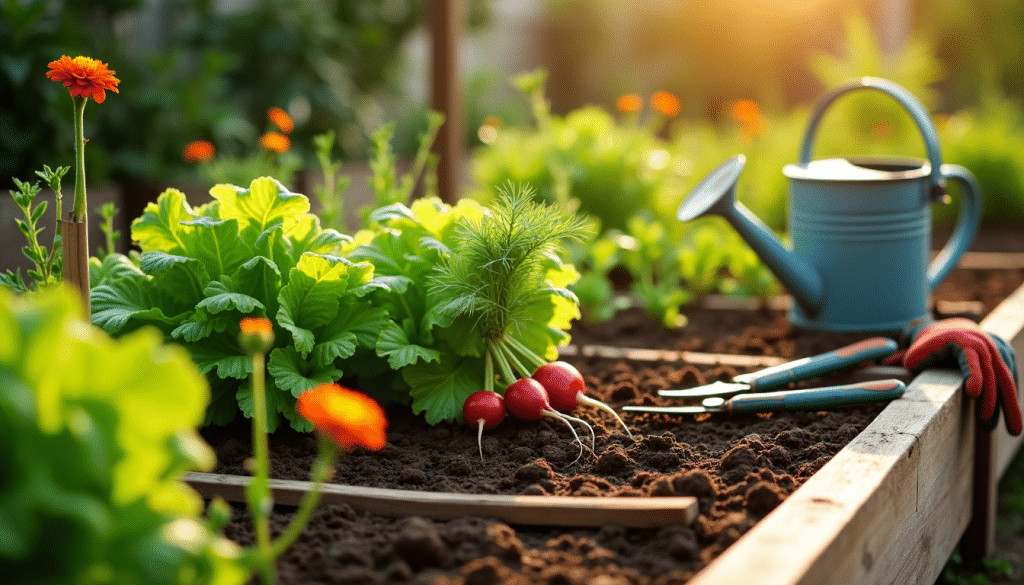

Starting a vegetable garden brought me one of the most surprising discoveries — you can start all year round! After years of gardening I have learned that even summer and autumn are excellent times to start for a winter or spring harvest.
From my experience, a vegetable garden is much more accessible than most people think. One square meter of soil is already enough to get started. Most vegetables need 6-8 hours of sunlight, but I have found that even in partial shade several crops such as lettuce, spinach and carrots thrive just fine.
I am happy to share my practical knowledge about the best times to start, site selection and suitable vegetables for beginners. Whether you want a quick harvest or are planting for the next season, these tips will help you on your way to a flourishing vegetable garden. Remember that every garden is unique — what works in mine may turn out differently in yours. Happy gardening!
The Best Times For a Vegetable Garden
I have found that choosing the right season for your vegetable garden makes a world of difference. After years of experimenting with different planting times I now know that each season offers its own magical possibilities.
Spring: The Classic Start
Spring remains my favorite time to start — nature awakens and the soil gradually warms. From experience I know that February to March is perfect for establishing your first vegetable garden. Once March arrives you can sow directly outdoors with delicious crops like spinach, garden peas, turnip greens and snow peas. Don’t forget to wait until after the Ice Saints (May 15) before planting frost-sensitive crops. Patience really pays off with this timing!
Summer: Quick Results
Summer has pleasantly surprised me as a start time for a vegetable garden. The combination of warmth and abundant sunlight leads to explosive growth. My favorite fast-growing summer crops are:
- Radishes – harvest-ready within 6-8 weeks
- Lettuce – continues producing until October
- Zucchinis – first fruits after 6 weeks
Autumn: Preparing for the Next Year
Autumn offers great opportunities to prepare your garden for the next season. From July I like to sow vegetables for the fall and winter harvest, such as endive and kale. October and November are perfect for planting bulbs, winter onions and garlic. I’ve learned that soil preparation now is crucial – work compost or well-rotted farmyard manure into the soil for a fertile start in spring. Happy planting!
Choosing Your Perfect Vegetable Garden Location
Through years of experimenting with different spots in my garden I have learned that the right location makes the difference between a lush harvest and disappointing results. Let me tell you what I’ve discovered about choosing the perfect spot.
Sunlight and Shade
Understanding sunlight patterns completely changed my gardening. For most vegetables, 6-8 hours of sunlight per day is ideal. But not every garden has perfect conditions – and that’s okay! From my experience, these light levels all offer possibilities:
- Full sun: more than 6 hours of direct sunlight – perfect for tomatoes and peppers
- Partial shade: 3 to 6 hours of sunlight – great for leafy greens
- Dappled shade: filtered light through trees – good for many herbs
- Moderate shade: 2-3 hours of sunlight – some crops can still grow here!
I’ve learned that the orientation of your vegetable garden is crucial. A spot on the west or south side of the house protects against those troublesome east and north winds. Don’t forget that shade from buildings and trees shifts during the day. I learned this by regularly taking photos of my garden.
Testing Soil Quality
The fertile soil is just as important as sunlight – I discovered this after a few failed attempts. Healthy soil feels crumbly and airy. I regularly test my soil with this simple method:
The most common soil types I encounter are sand, clay, peat, and loam. Sandy soil warms up quickly but holds little nutrients – I noticed this in my first vegetable garden. Clay soil, on the other hand, is full of nutrients but requires more work to cultivate.
A simple test I always use: make some soil slightly moist. Can you mold it? Then it’s clay. Does it fall through your fingers? That’s sandy soil. For those who want to know exactly what they’re dealing with: a soil test reveals the pH and nutrients. Good luck finding your perfect garden spot!
First Steps for Beginners
Starting my first vegetable garden was exciting and overwhelming. After many setbacks I’ve learned what really matters for a good start. Let me take you through my discoveries.
Determining Garden Size
Although a vegetable garden of 120-130 square meters is perfect for a family of four to harvest year-round, I always recommend beginners start smaller. From personal experience I know that one square meter is already enough for delicious fresh lettuce and herbs for 1-2 adults. The nice thing is that with only fifteen minutes of maintenance per week you can grow a variety of vegetables. When I discovered this, it completely changed my view on vegetable gardening!
Basic Tools
Having learned by trial and error, I now know which tools are truly indispensable:
- Spade or shovel – my faithful partner for soil cultivation
- Rake – perfect for leveling
- Hoe – my secret weapon against weeds
- Pruning shears – for precise maintenance
- Watering can or garden hose – lifeblood for your plants
I learned that cheap often becomes expensive when it comes to garden tools. That first ‘budget’ hoe had to be replaced after two months. Patience really pays off when collecting quality tools!
Budget Planning
My first complete vegetable garden cost about €300-350. Here’s how I split it:
The biggest investment went to garden beds and soil (€100-200). I also spent €30-50 on basic tools, €50 on soil and nutrients, and about €20 on seeds. I found you can save smartly by looking for second-hand tools or swapping seeds with other gardeners.
The most important thing I’ve learned: you don’t have to buy everything at once. Start with the essentials and expand as your experience grows. Enjoy your gardening!
Smart Vegetable Choices by Season
Choosing the right vegetables for each season taught me that timing is everything. After years of experimenting I know exactly which crops grow best and when. Let me take you through my findings!
Easy Starter Vegetables
Radishes are my absolute favorite for beginners. I’ve found they are ready to harvest within 4-6 weeks and require hardly any care. Lettuce varieties like arugula and oakleaf lettuce have never disappointed me either — they do wonderfully in pots and keep producing new leaves as you harvest.
Zucchinis deserve a special mention. They do require about a square meter of space, but what a reward — one plant easily gives me twenty zucchinis! Beetroot has also proven to be a reliable choice — especially the ‘Boltardy’ variety which bolts less quickly, perfect for beginner gardeners like I used to be.
Fast-growing Crops
Garden cress is the absolute speed champion — after one week you can already harvest! Cut-and-come-again lettuce follows shortly with a first harvest within four weeks. From my experience these vegetables also grow extremely fast:
- Spinach – fresh on your plate after 7 weeks
- Radish – ready to harvest in 4-5 weeks
- Swiss chard – first harvest after 8 weeks
Hardy Varieties
For year-round harvesting, hardy vegetables are indispensable in your garden. Kale is my winter champion — even at -20°C it keeps growing happily. I’ve noticed that cavolo nero (palm kale) even tastes better after a frost.
Winter purslane also pleasantly surprised me. Between October and March you can regularly pick fresh leaves. Lamb’s lettuce and winter cress are my secret weapons for late sowing in September or October – you can still harvest in the same year! Happy gardening!
Conclusion
After years of trial and error in my vegetable garden I have discovered that success is mainly about good preparation. My biggest gardening lesson? You can start at any time of year, as long as you choose the right crops for each season. Patience really pays off when gardening!
I still remember that first square meter of garden well – with only a hoe, some seeds and lots of enthusiasm my gardening adventure began. Now I know that such a modest start often gives the most satisfaction. Even with limited sunlight or a small balcony there are surprisingly many possibilities for a productive vegetable garden.
Whether you start with fast-growing radishes in the summer sun or winter-hardy kale that withstands frost – every start is a good start. From my experience, with the right choice of location, basic tools and a modest budget of €300-350 you can already lay a solid foundation for years of gardening enjoyment.
Don’t forget that every gardener once started as a beginner. Start small, learn from your mistakes (believe me, I made them too!) and expand gradually as your experience grows. The best moment is still when you harvest those first homegrown vegetables. Happy gardening!
FAQs
Q1. When is the best time to start a vegetable garden? A vegetable garden can be started at any time of year. Spring is traditional, but summer offers quick results and in autumn you can prepare for the next season.
Q2. How much sunlight does a vegetable garden need? Most vegetables need 6-8 hours of sunlight per day. However, there are also vegetables that do well in partial shade or with less direct sunlight.
Q3. What are good vegetables for beginners? Radishes, lettuce, zucchini and red beets are excellent choices for beginner gardeners. They are relatively easy to grow and yield quick results.
Q4. How large should a vegetable garden be for a beginner? As a beginner you can start with one square meter. This is enough for fresh lettuce and herbs for 1-2 adults and requires only about 15 minutes of maintenance per week.
Q5. How much does it roughly cost to start a vegetable garden? A complete beginner’s vegetable garden requires an initial investment of approximately €300-350. This includes costs for garden beds, soil, basic tools, plant food and seeds.