
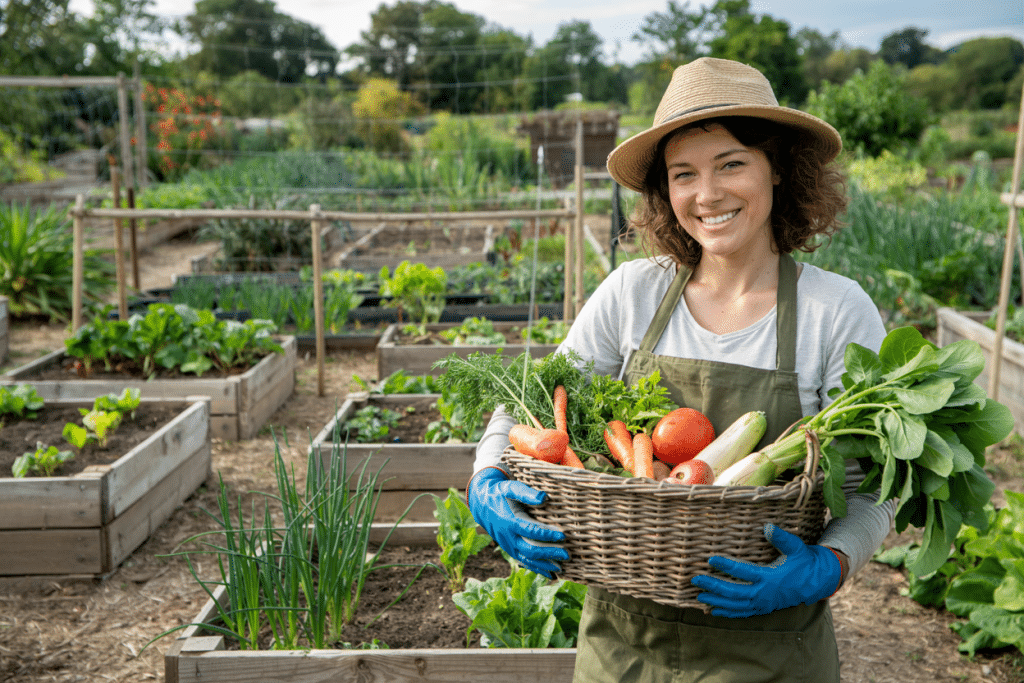

Imagine: you walk into your garden, pick a juicy tomato straight from the plant and gather some fresh herbs for your evening meal. The sun shines on your face as you enjoy the scents and colors of your own vegetable garden. This doesn’t have to remain a dream! With some basic knowledge, patience and enthusiasm, anyone can start a successful vegetable garden. Whether you have a large backyard or only a small balcony, vegetable gardening is accessible to everyone. In this comprehensive article I will take you step by step into the world of vegetable gardening for beginners.
Why start your own vegetable garden?
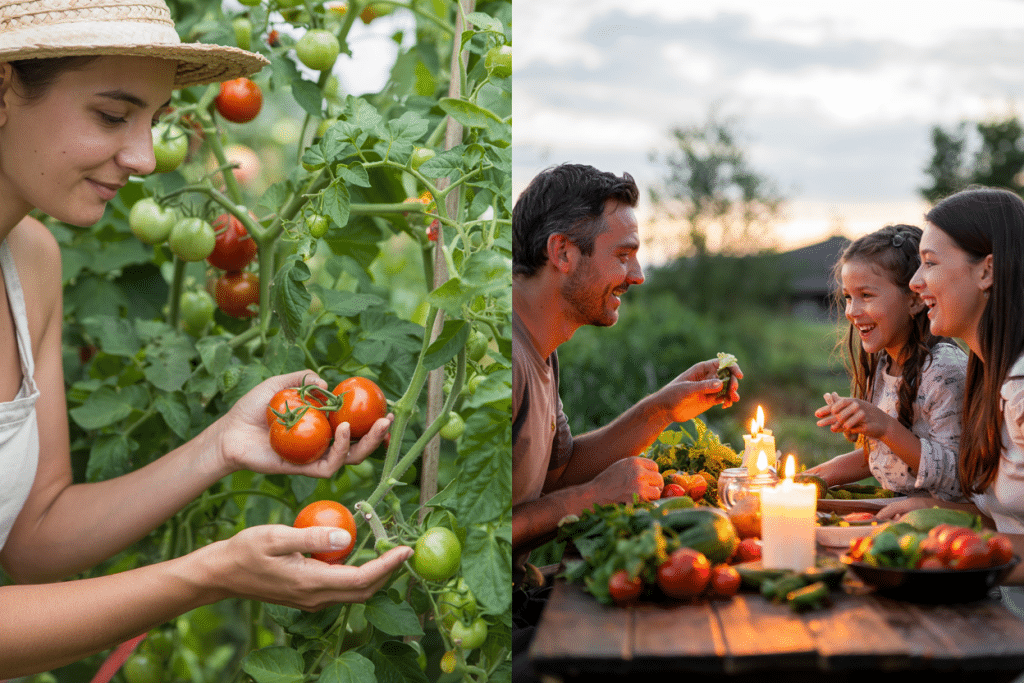
Before we dive into the practical details, it’s good to pause and ask: why would you want to start a vegetable garden in the first place?
Fresh, flavorful vegetables
Nothing tastes as good as home-grown vegetables. The flavor of a tomato from your own garden is incomparable to what you find in the supermarket. That’s because you can harvest vegetables at the perfect moment of ripeness and use them immediately.
Healthier eating
When you grow your own vegetables, you know exactly what’s in them — or rather, what’s not in them. No pesticides or artificial fertilizers if you don’t want them. Besides, freshly harvested vegetables contain more nutrients than products that have been traveling for days or weeks.
Environmentally friendly
Having your own vegetable garden reduces your ecological footprint. Your food doesn’t need to be transported and you can choose sustainable cultivation methods. In addition, you contribute to biodiversity by creating a habitat for beneficial insects and other animals.
Relaxation and fulfillment
Gardening is a proven way to reduce stress. Working with your hands in the soil, the connection with nature and the rhythm of the seasons bring calm. The satisfaction you feel when you harvest your own crop is priceless.
Educational for children
For families with children, a vegetable garden is a living classroom. Children learn where their food comes from, develop a sense of responsibility, and gain greater appreciation for vegetables when they have helped grow them.
Choosing the right location
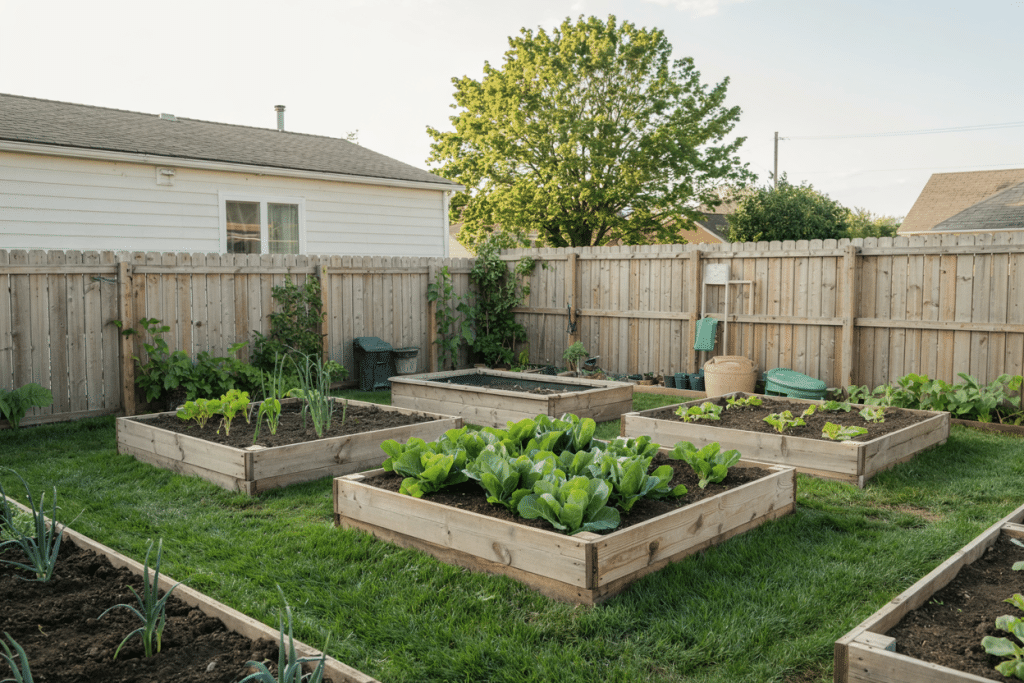
The foundation of a successful vegetable garden starts with choosing the right location. This is crucial for the health and productivity of your plants.
Sunlight
Most vegetables need at least 6 hours of direct sunlight per day. Observe your garden over the course of a day to see which spots get the most sun. Leafy greens such as lettuce and spinach can tolerate slightly less sun, while fruiting plants like tomatoes, peppers, and zucchini need a lot of sun.
Shelter
A spot that is too windy can be harmful to your plants. Wind dries out the soil and can damage young plants. Look for a location that is somewhat sheltered, for example by a hedge, fence, or wall.
Access to water
Your vegetable garden needs regular watering, so make sure there is a water source nearby. Carrying heavy watering cans long distances will quickly dampen your enthusiasm.
Drainage
Avoid places where water remains after a rainfall. Most vegetables do not like ‘wet feet’ and can begin to rot if the soil stays too wet.
Small space or no garden?
No big garden? No problem! You can also do vegetable gardening in:
- Raised beds
- Pots and containers
- Vertical gardens on a wall or balcony
- Community vegetable gardens in your neighborhood
The soil: the foundation of your vegetable garden
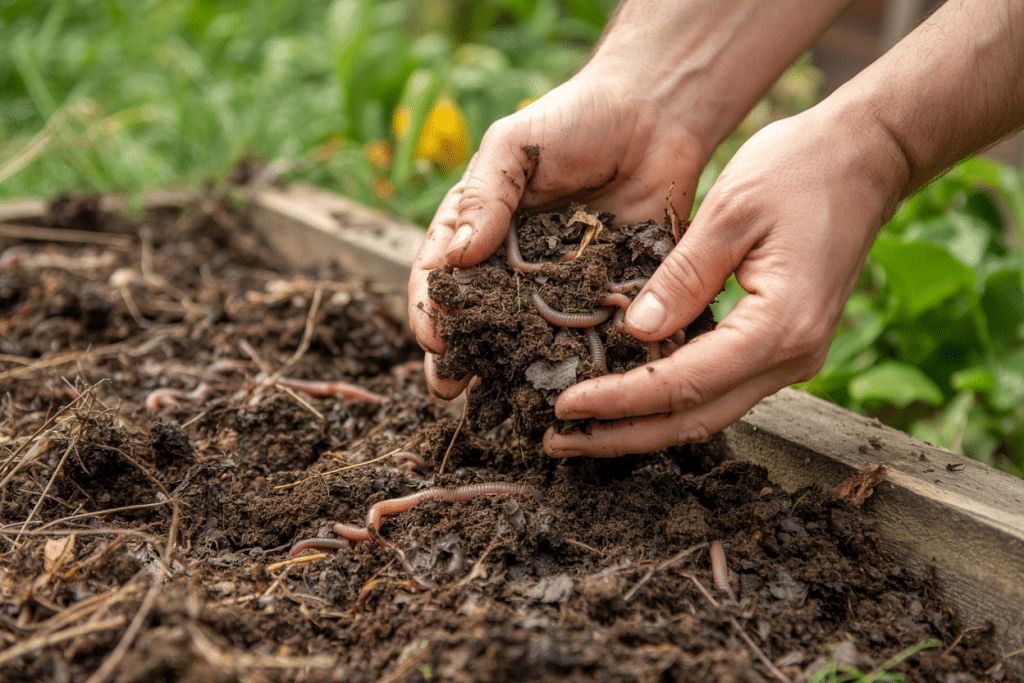
Healthy plants start with healthy soil. The soil is the foundation on which your entire vegetable garden rests.
Soil analysis
Before you begin, it’s useful to get to know your soil. You can do a simple pH test (available at garden centers) to see whether your soil is acidic, neutral or alkaline. Most vegetables do best in slightly acidic to neutral soil (pH 6–7).
Soil improvement
Almost any soil can be improved by adding organic matter:
- Compost: The ‘black gold’ for gardeners. Compost improves soil structure, adds nutrients and stimulates soil life.
- Manure: Well-rotted animal manure (cow, horse, chicken) is an excellent soil improver. Note: use only old, fully decomposed manure to avoid ‘burning’ your plants.
- Leaf mould: Enriches the soil and improves structure.
- Cover crops: Plants such as phacelia, clover or lupin that you grow to later turn into the soil enrich the soil with nitrogen and organic matter.
Preparing the soil
Follow these steps to prepare your soil for planting:
- Remove all weeds, especially perennial types such as couch grass and ground elder. Make sure you remove the roots completely.
- Dig or fork the soil to about 30 cm deep. This improves drainage and allows plant roots to grow deeper.
- Work compost or well-rotted manure into the top 15-20 cm of soil.
- Let the soil rest for a week or two before planting so everything can ‘settle’.
- Rake the soil smooth to create a seedbed.
For vegetable beds or pots you can buy special vegetable soil, which is already blended with the right nutrients and structure.
What are you going to grow?
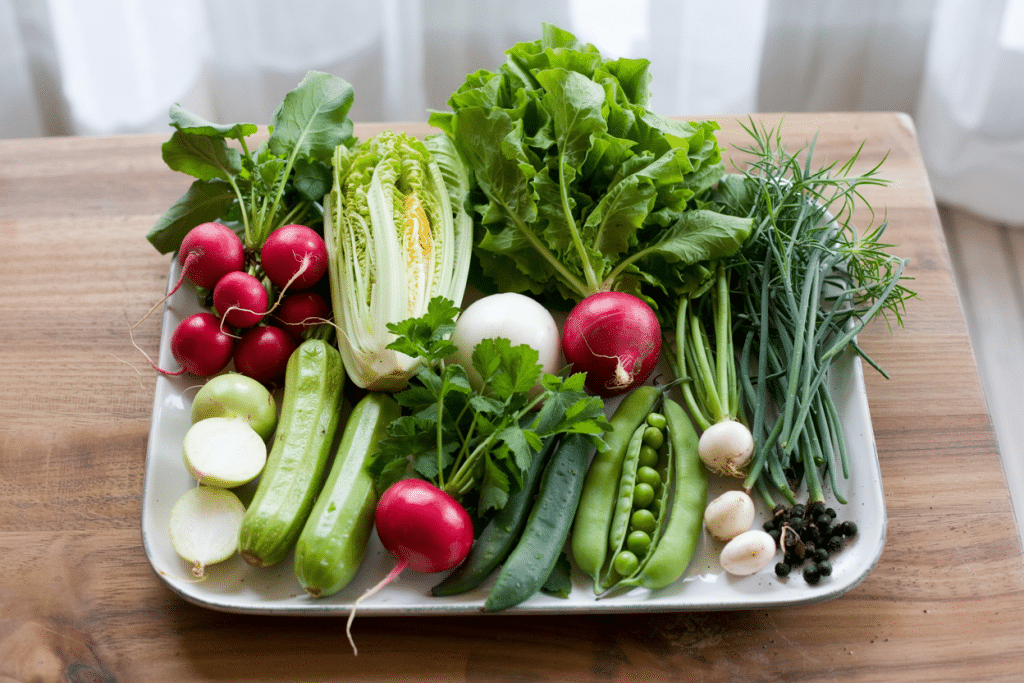
As a beginner it’s best to start with vegetables that are relatively easy to grow and give quick results. Here are a few suggestions:
Easy vegetables for beginners
- Radishes: Ready to harvest in about 4 weeks, perfect for impatient gardeners.
- Lettuce and other leafy greens: Easy to grow and you can often harvest by picking only the outer leaves.
- Zucchini: A single plant can provide you with plenty of zucchinis in the summer.
- Green beans: Both bush and pole beans are productive crops that yield well.
- Peas: Delicious when picked and eaten fresh.
- Swiss chard: Less known but very productive and less susceptible to diseases than spinach.
- Herbs: Chives, parsley, mint and basil are easy to grow and immediately useful in the kitchen.
Choose what you like to eat
It sounds logical, but primarily grow vegetables that you actually like and eat often. There’s little as frustrating as an abundance of vegetables that no one in your household wants to eat.
Think about the season
Each vegetable has its own optimal growing period. Some are ‘cool-weather crops’ (such as peas, radishes, spinach), others are ‘warm-weather crops’ (such as tomatoes, peppers, courgettes). Consult a sowing calendar or planting guide to determine when you can sow or plant what.
Sow seeds or buy seedlings?
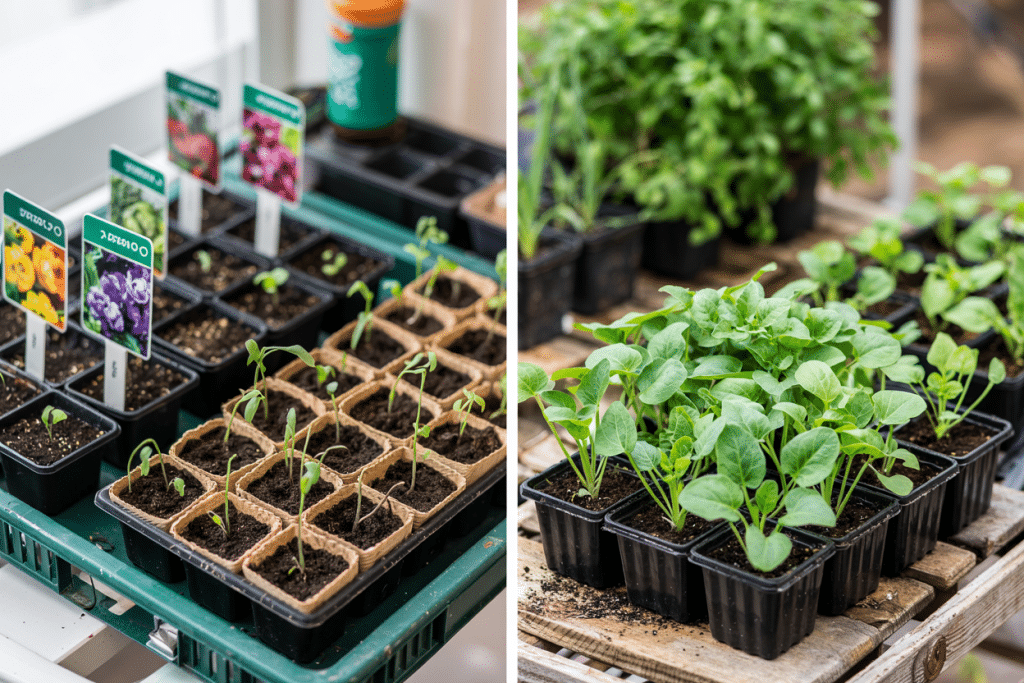
As a beginner you’re faced with the choice: will you sow yourself or would you rather buy pre-grown seedlings?
Benefits of sowing your own seeds
- It’s cheaper
- You have a wider choice of different varieties
- It gives extra satisfaction to go through the whole process
- You can sow exactly when you want
Benefits of buying seedlings
- You get faster results
- The difficult germination stage is already over
- Ideal for slow germinators like peppers and tomatoes
- Less chance of failure
As a beginner it’s wise to do a mix: buy seedlings for the more challenging vegetables and sow the easier varieties yourself.
Tips for successful sowing
- Always follow the instructions on the seed packet for the correct sowing period, depth and spacing.
- Use seed compost for sowing in pots or trays – it’s lighter and cleaner than regular garden soil.
- Keep the soil moist but not waterlogged during germination.
- Some seeds need light to germinate, others do not – check this on the seed packet.
- Label your seedlings so you know what’s planted where.
- Provide sufficient warmth – many seeds germinate better at higher temperatures.
Creating a simple vegetable garden plan
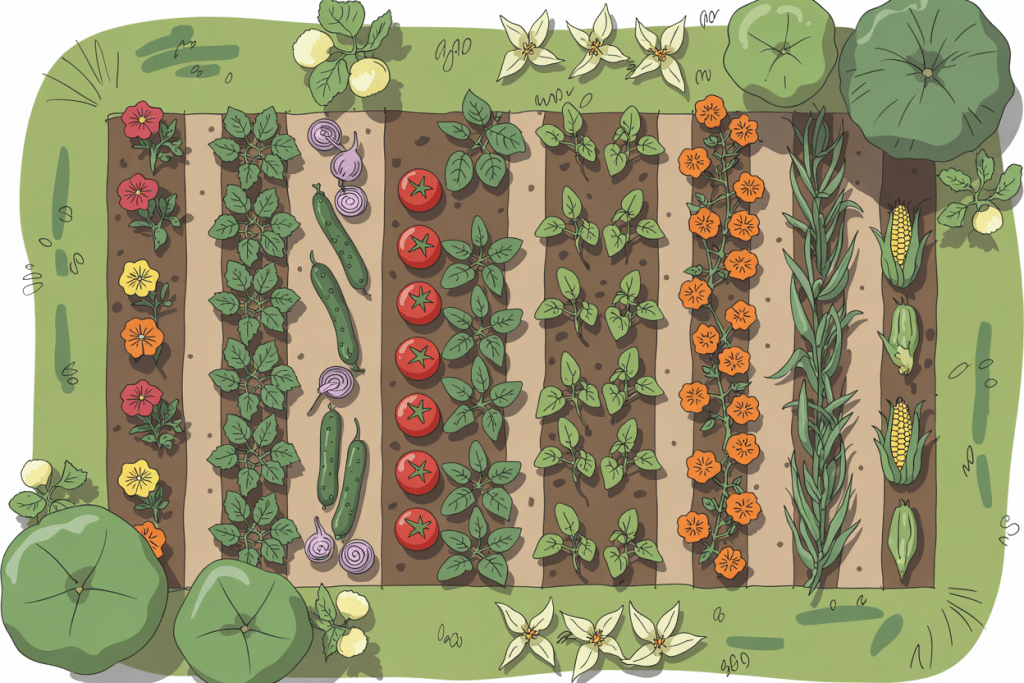
A good plan beforehand will save you a lot of headaches later. Start small with a vegetable garden of about 2 by 3 metres or a few beds.
Layout of your vegetable garden
- North–south orientation: Preferably lay out rows in a north–south direction so plants receive sunlight evenly.
- Height: Place taller crops (such as tomatoes or pole beans) on the north side so they don’t cast shade on shorter plants.
- Accessibility: Make paths between the beds wide enough to work comfortably (at least 50 cm).
- Grouping: Place plants with similar water and sunlight needs together.
- Crop rotation: Plan ahead by noting what is planted where so you can rotate next year (this prevents disease and soil depletion).
Companion planting
Some plants grow better when near each other. This is called companion planting. Some classic combinations:
- Carrots and onions (onions deter the carrot fly)
- Tomatoes and basil (improves flavor and keeps insects away)
- Cabbage and aromatic herbs (herbs mask the scent that attracts cabbage whites)
- Beans and corn (beans enrich the soil with nitrogen that corn benefits from)
Planting and sowing
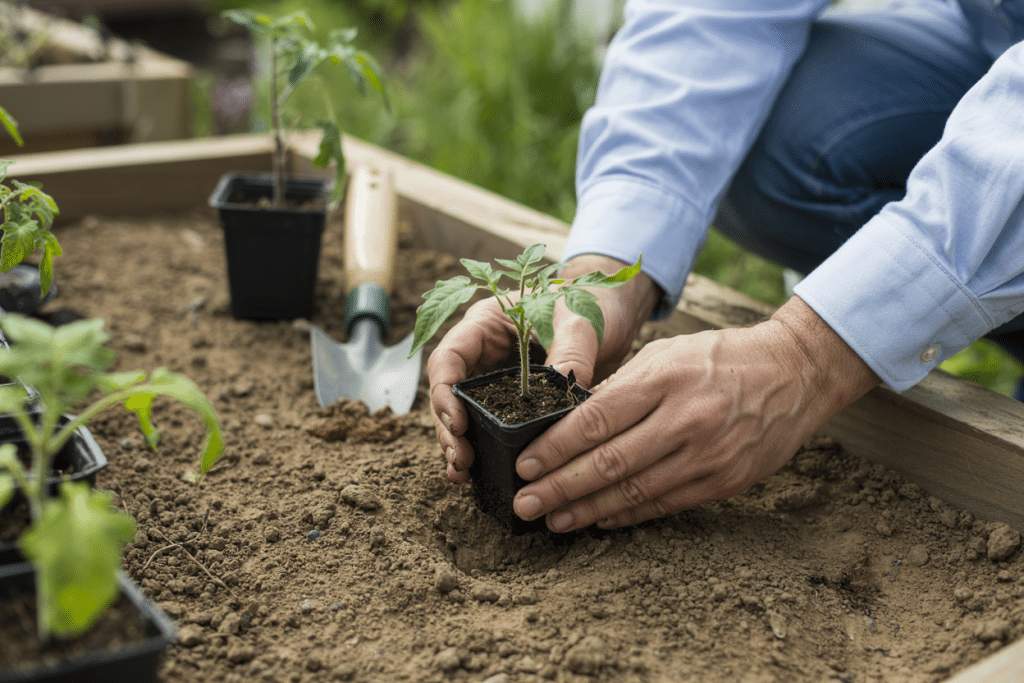
Now that your plan is ready, you can start planting and sowing. Here are some general guidelines:
Direct sowing in the open ground
- Make a furrow at the depth indicated on the seed packet.
- Don’t sow too closely – thin out later where needed.
- Cover with fine soil and press lightly.
- Water with a fine spray to prevent the seeds from washing away.
- Mark the row with a label.
Planting seedlings
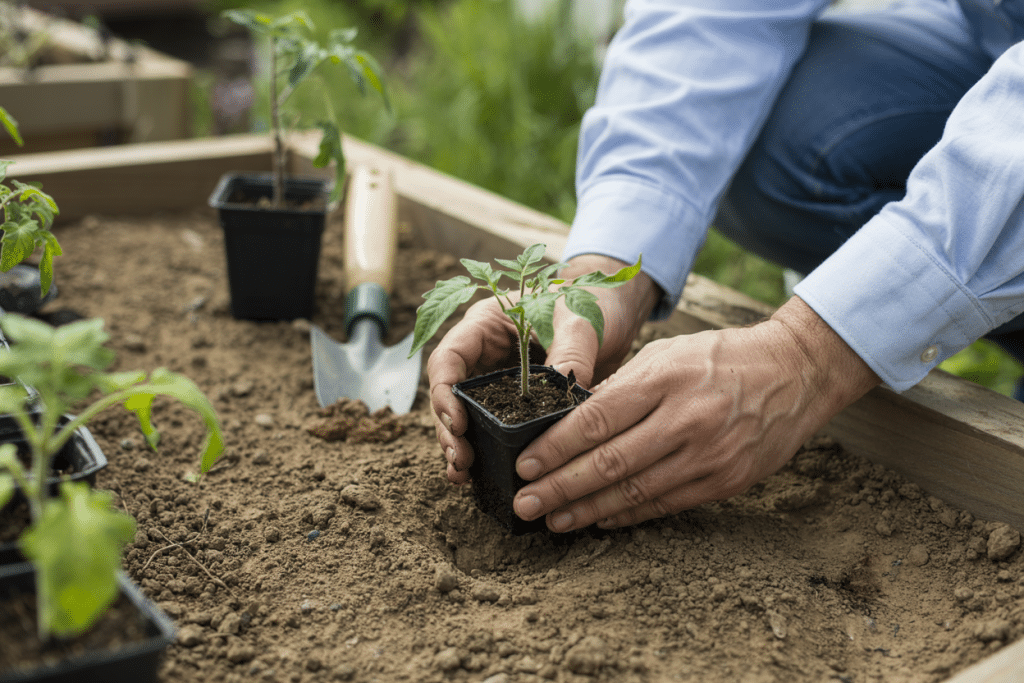
- Dig a hole large enough for the root ball.
- Carefully remove the seedling from the pot.
- Place it in the hole at the same depth as it was in the pot.
- Backfill with soil and lightly firm it around the plant.
- Water immediately after planting.
Timing
Observe the last frost date in your area (in the Netherlands usually mid-May) before putting frost-sensitive plants such as tomatoes, zucchini and beans outside. You can sow these earlier indoors.
Watering and maintenance
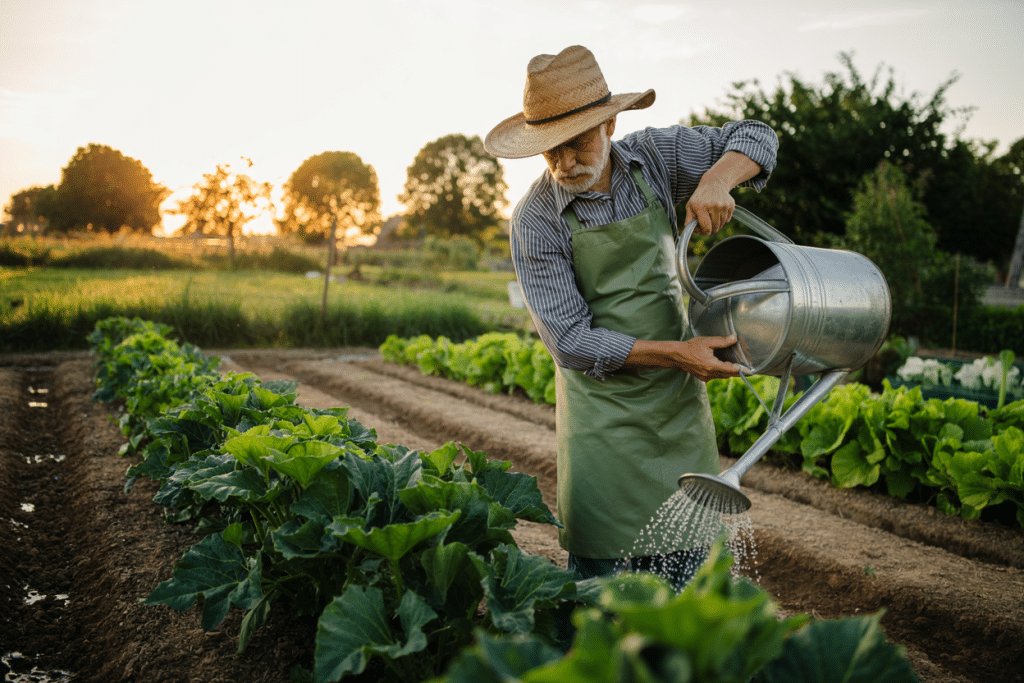
Consistency is the key to a healthy vegetable garden. Here are the main maintenance tasks:
Watering
- Better to water thoroughly once a week than a little every day. This encourages roots to grow deeper.
- Water early in the morning for best uptake and reduced risk of fungal disease.
- Water at the base of the plant, not on the leaves (this prevents fungal diseases).
- Adjust your watering schedule to the weather — more during hot, dry periods.
- Consider a drip irrigation system for efficient water use.
Mulching
Cover the soil between your plants with a layer of organic material such as compost, straw, grass clippings, or wood chips. This has several benefits:
- It retains moisture
- It suppresses weeds
- It regulates soil temperature
- It slowly adds nutrients to the soil
Weeding
- Weed regularly, before weeds get out of control.
- Preferably weed after a rainfall when the soil is moist and weeds come out more easily.
- Use a hand hoe for surface weeds and a weed extractor for deep-rooted weeds.
Fertilizing
- Start with good soil and you’ll need less additional fertilization.
- For demanding crops like tomatoes and cabbage, you can apply extra fertilizer mid-season.
- Preferably use organic fertilizers such as compost tea, diluted manure, or organic liquid fertilizer.
Diseases and pests
- Check your plants regularly for signs of disease or pests.
- Remove affected leaves or plants immediately to prevent spread.
- Encourage natural enemies such as ladybugs, hoverflies, and hedgehogs.
- If you must intervene, choose biological pest control products.
The harvest: enjoying the fruits of your labor
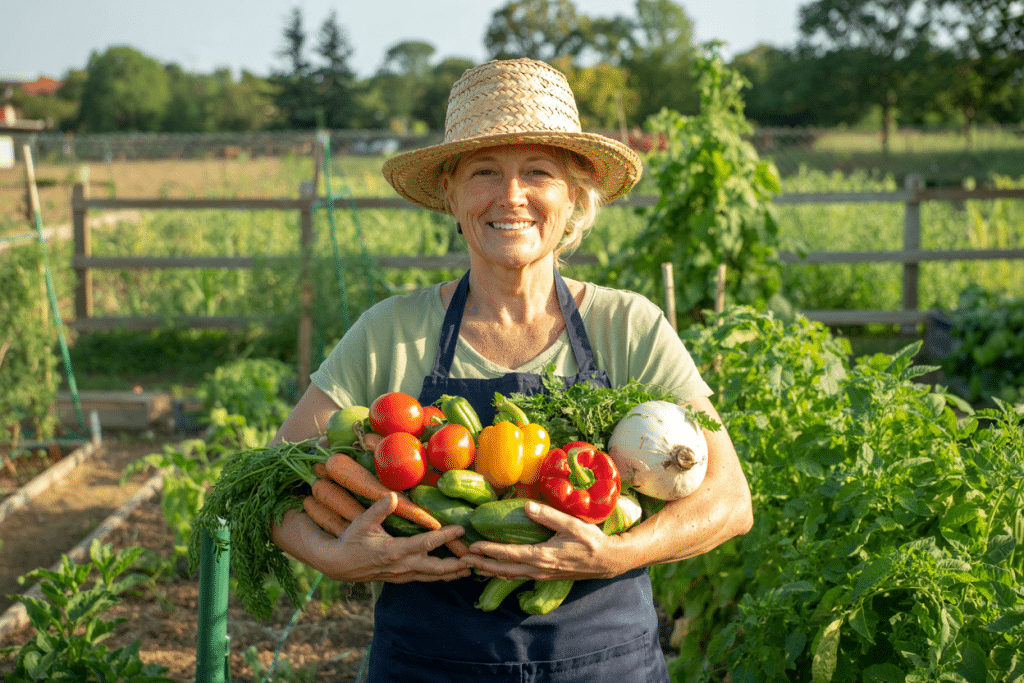
The most satisfying moment is of course the harvest. Here are some tips:
When to harvest?
- Harvest vegetables when they are ripe, not earlier or much later.
- Preferably harvest in the morning when flavors are most concentrated.
- For crops like lettuce, zucchini, and beans, you encourage new production by harvesting regularly.
How to harvest?
- Use a sharp knife or scissors to avoid damaging the plant.
- For root crops like carrots and beets, it’s helpful to loosen the soil first.
- Be careful with delicate crops such as lettuce and herbs.
Storing your harvest
- Some vegetables can be processed immediately or frozen for later use.
- Root crops like carrots, beets, and potatoes can be stored in a cool, dark place.
- Onions and garlic can be dried and braided for long-term storage.
- Herbs can be dried or frozen in olive oil in ice cube trays.
Common beginner mistakes
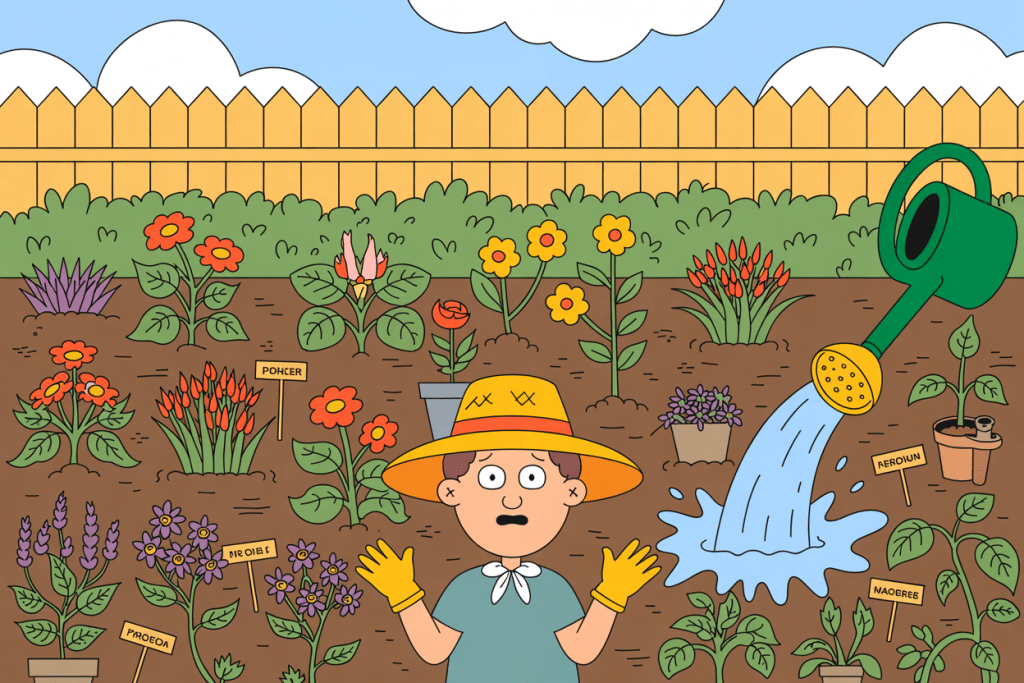
Learn from the most common mistakes that beginning vegetable gardeners make:
- Starting too big: Start small and expand later as you gain more experience.
- Planting too close together: Follow the recommended spacing. Plants need room to grow and air circulation prevents diseases.
- Irregular watering: Aim for a consistent schedule. Plants prefer regularity over extremes.
- Forgetting to label: Mark what you planted where. It’s surprising how quickly you forget what’s planted where.
- Sowing outdoors too early: Respect the last frost date in your region.
- Neglecting the soil: Invest in good soil and continue to improve it.
- Not rotating: Don’t plant the same crops in the same place year after year.
- Overenthusiastic pruning: Read up on the specific pruning needs of each plant.
- Ignoring pests until it’s too late: Intervene early at the first signs of problems.
- Too much focus on perfection: Accept that not everything will go perfectly and treat every ‘failure’ as a learning opportunity.
Vegetable gardening throughout the year
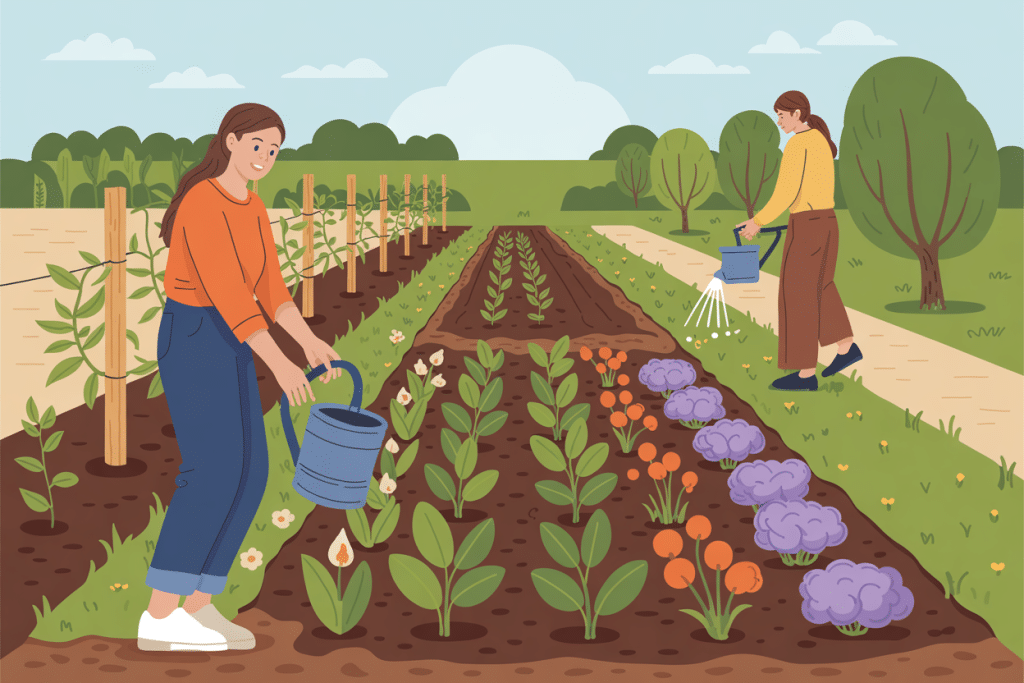
Vegetable gardening is a cyclical process that follows the rhythm of the seasons. Here is a general overview of the main tasks per season:
Spring (March-May)
- Prepare the soil
- Sow the first cold-tolerant crops (peas, radish, spinach)
- Start seeds indoors for heat-loving crops
- After the last frost: transplant seedlings started indoors
Summer (June-August)
- Water regularly and weed
- Harvest early crops
- Fertilize where necessary
- Sow a second round for an autumn harvest
Autumn (September–November)
- Harvest summer crops
- Plant winter crops (kale, Brussels sprouts)
- Clear out spent plants
- Sow green manure (cover crops) on empty areas
Winter (December–February)
- Make plans for the next season
- Order seeds
- Maintain tools
- Turn the compost
- Enjoy winter vegetables when they’re available