

{
“@type”: “Article”,
“author”: {
“url”: “https://hobbytuinier.be”,
“name”: “Hobbytuinier”,
“@type”: “Organization”
},
“@context”: “https://schema.org”,
“headline”: “Vegetable Garden Harvesting Guide: Efficient and Sustainable Harvesting”,
“publisher”: {
“url”: “https://hobbytuinier.be”,
“name”: “Hobbytuinier”,
“@type”: “Organization”
},
“inLanguage”: “en”,
“articleBody”: “Learn the best techniques for a bountiful harvest step by step with our vegetable garden harvesting guide. Start now with sustainable gardening!”,
“description”: “Learn the best techniques for a bountiful harvest step by step with our vegetable garden harvesting guide. Start now with sustainable gardening!”,
“datePublished”: “2025-09-05T09:01:13.873Z”,
“mainEntityOfPage”: “https://hobbytuinier.be/moestuin-oogsten-handleiding”
}
Harvesting vegetables from your own vegetable garden sounds like pure pleasure. Each season there is a fresh bounty waiting in the garden. Yet experience shows that more than 40 percent of gardeners often harvest too early or too late, causing much flavor and quality to be lost. Surprisingly, the right moment to harvest is not as obvious as you might think. Because the difference between a bland carrot and a crisp, sweet snack often lies in a few small, often just-missed signs.
Table of contents
- Step 1: Determine the right time to harvest
- Step 2: Gather the necessary harvesting tools
- Step 3: Harvest carefully to prevent damage
- Step 4: Check the quality of the harvested produce
- Step 5: Store the harvest properly for optimal freshness
Short Summary
| Important Point | Explanation |
|---|---|
| 1. Determine the right harvest time | Harvest vegetables at the right time for optimal ripeness and flavor. Harvesting too early or too late affects quality. |
| 2. Gather the right harvesting tools | Use sharp and clean tools for an efficient and careful harvest. This prevents damage to the plants. |
| 3. Harvest carefully to prevent damage | Avoid bruising by picking carefully and always use clean tools to minimize quality loss. |
| 4. Check the quality of the harvested produce | Inspect produce for color, firmness, and damage to ensure shelf life and prevent disappointment. |
| 5. Store the harvest correctly to preserve freshness | Separate crops based on their storage characteristics and ensure the correct storage temperature to maintain freshness. |
Step 1: Determine the right harvest time
Determining the right time to harvest is crucial for achieving the best quality and flavor of your vegetables from the vegetable garden. Each crop has its own specific signs of ripeness, and recognizing these signals requires observation, experience and careful timing.
When harvesting, it’s not just about picking your crops but about finding that perfect moment when your vegetables have reached optimal ripeness. Harvesting too early means unripe, tasteless produce, while harvesting too late can result in overripe, fibrous or even damaged fruits. Regular monitoring is therefore the key to successful harvesting.
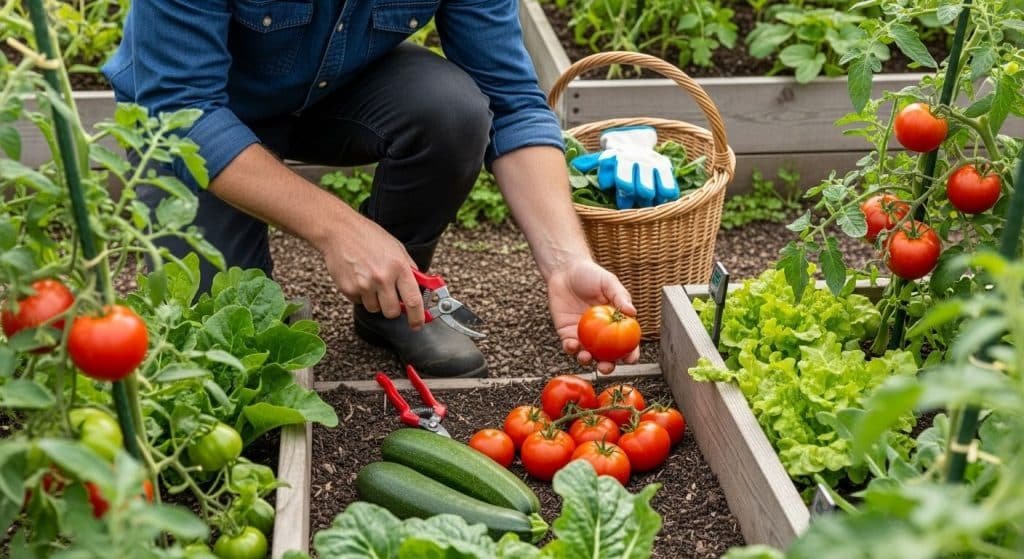
Different crops have different indicators. Take tomatoes: they are ripe when they have a deep, even color and feel soft without being too soft. Zucchinis are perfect when they are about 15 to 20 centimeters long and have a glossy, firm skin. Leafy greens like lettuce or spinach can be harvested as soon as the leaves are large enough to use, but before they start to flower.
To determine the right time to harvest you should use multiple senses. Look at the color, feel the texture, and pay attention to the size of your crops. Some vegetables like peas and beans are best harvested in the morning when they’re still full of moisture and crisp. Learn more about the best harvesting methods for different crops and refine your skills.
Important signs that it’s time to harvest:
- Crops have reached the expected color and size
- Fruits are firm but not hard
- Leaves are full and healthy without signs of wilting
A final tip: always start with small trial harvests. By regularly harvesting small amounts, you learn to sense exactly when your crops are at their best. Your vegetable garden is a living system that requires constant attention and care, and determining the right time to harvest is a skill you will refine over time.
Step 2: Gather the necessary harvesting tools
Gathering the right tools is an essential part of a successful vegetable garden harvest. The quality of your tools not only determines your comfort while working, but also the care you give your crops. A well-equipped gardener prevents damage to plants and makes the harvesting process efficient and enjoyable.
A basic set of tools for vegetable gardening includes several indispensable items. A sharp pruning shear is, for example, crucial for gently harvesting crops such as tomatoes, peppers, and herbs without damaging the plant. For leafy greens such as lettuce or spinach, a sharp knife with a straight blade is ideal for neatly cutting without harming the rest of the plant.
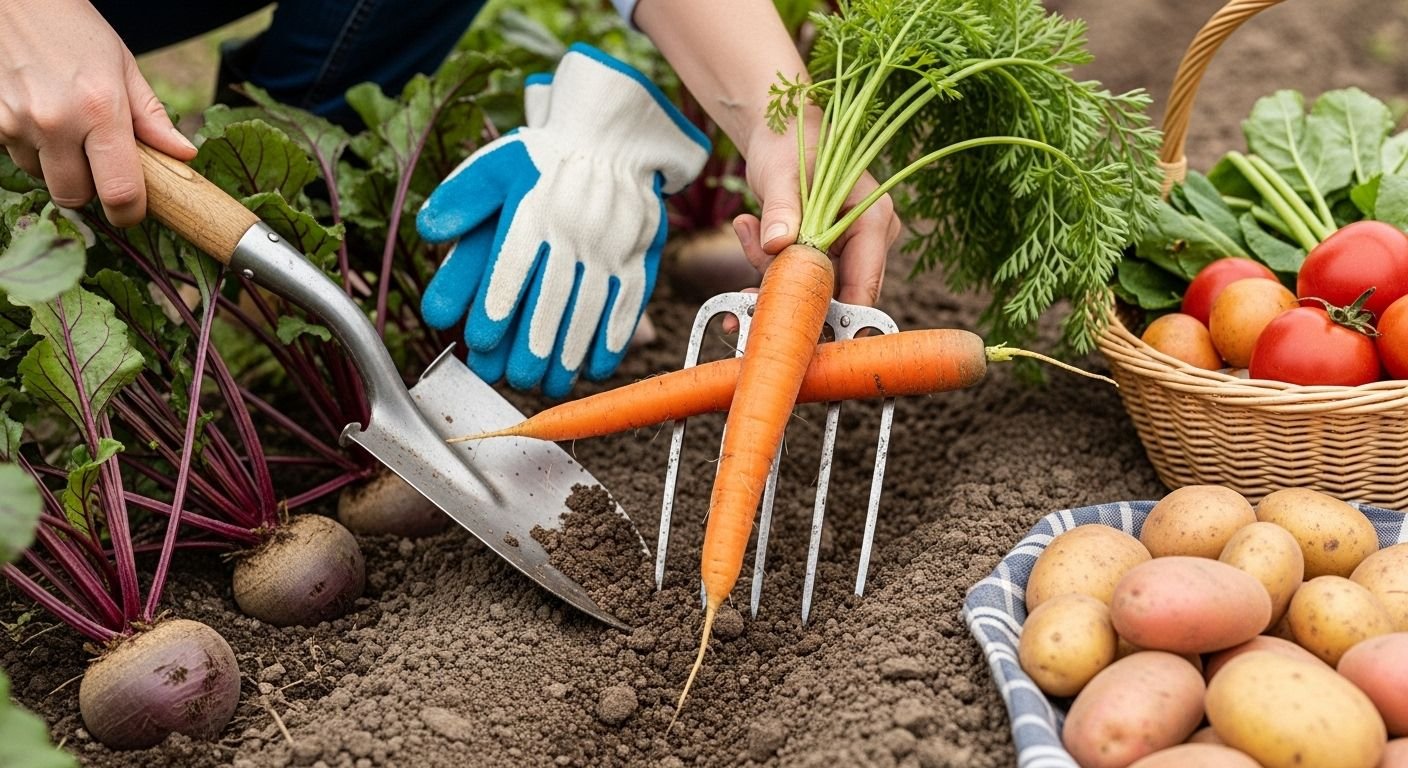
For root crops such as carrots, beets, and potatoes, other tools are needed. A garden fork or spade with a straight handle helps you loosen the soil gently without damaging the roots. Discover more about efficient harvesting methods for different crops and refine your gardening skills.
In addition to cutting tools, protective gear is also important. Wear sturdy garden gloves to protect your hands from thorns, sharp leaf edges and dirty soil. A sturdy garden apron with plenty of pockets is useful for keeping your tools within reach and preventing dirty hands.
A set of essential harvesting tools includes:
Here you will find an overview of essential harvesting tools, their specific function and a brief explanation for optimal use in the vegetable garden.
| Tool | Function | Explanation |
|---|---|---|
| Sharp pruning shears | Picking/cutting fruits and herbs | Prevents bruising and damage |
| Straight-bladed knife | Cleanly cutting leafy greens | Maintains plant health |
| Garden fork or spade | Loosening and digging up root crops | Protects roots from breaking |
| Sturdy garden gloves | Protection for hands | Prevents injuries from thorns |
| Carrying basket or harvest bag | Collecting and carrying harvested produce | Keeps crops clean and organized |
| Buckets for water cooling | Temporarily keeps picked vegetables fresh | Slows wilting during harvest |
- Sharp pruning shears
- Straight-bladed knife
- Garden fork or spade
- Sturdy garden gloves
- Carrying basket or harvest bag
- Buckets for water cooling of picked vegetables
Remember that proper maintenance of your tools is just as important as choosing them. Clean your tools after each use, dry them thoroughly and store them in a dry place to prevent rust. A sharp, clean tool prevents disease transmission between plants and makes your harvesting process pleasant and efficient.
Step 3: Harvest carefully to prevent damage
Harvesting your garden crops requires more than just picking. Carefulness is the key to preserving the quality and flavor of your fresh produce. Every action, from loosening the plant to collecting it, can potentially cause damage that affects the shelf life and quality of your harvest.
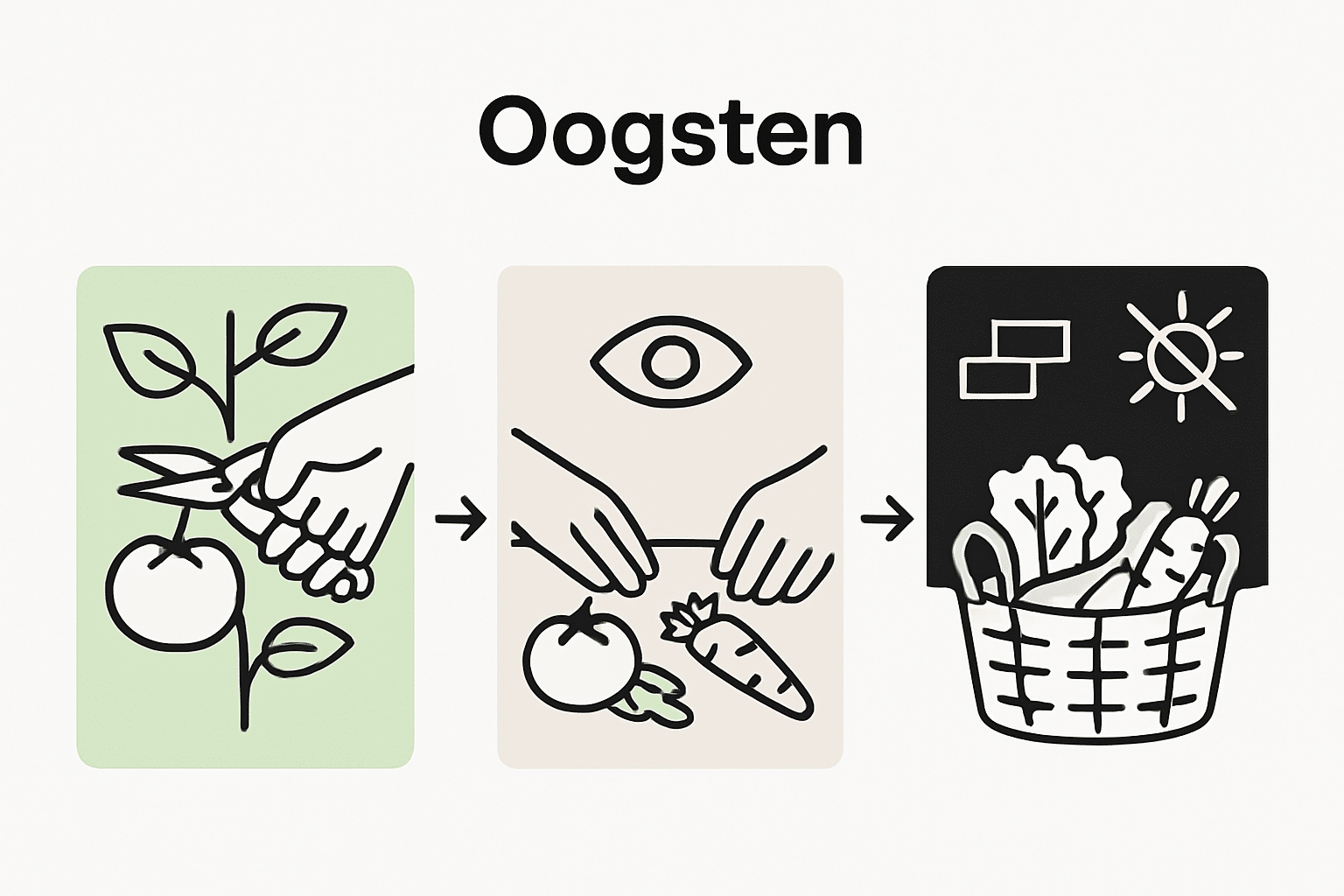
Start by choosing the right time. Preferably harvest early in the morning when the crops are still full of moisture and temperatures are low. Warm afternoon or evening hours can lead to faster wilting and loss of quality. Always use sharp, clean tools to detach crops, which prevents tearing and unnecessary damage.
Different crops require different harvesting approaches. Leafy greens like lettuce are best neatly cut with a sharp knife, leaving the central growing point intact. Learn more about special harvesting methods for leafy greens and refine your technique. For tomatoes and other delicate fruits, it is important to hold them gently and twist softly so they detach from the stem without damage.
Root crops such as carrots, beets and potatoes require a different approach. Use a garden fork to gently loosen the soil around the plant. Do not pull directly on the plant, but use your hands to scrape the soil away and gently remove the vegetable. This prevents bruising and damage to the crops.
Important points to consider during harvest:
- Always use clean, sharp tools
- Handle crops as little as possible
- Avoid pinching or pulling plants
- Collect directly into clean, well-ventilated containers
- Keep harvested produce out of direct sunlight
After harvesting it is essential to cool your products quickly and store them properly. Remove any sand or soil carefully with a soft brush or by gently rinsing. Inspect each item for damage or signs of rot before storing it.
 By working carefully, you ensure the best quality and flavor of your home-grown vegetables.
Step 4: Check the quality of the harvested produce
After careful harvesting, checking the quality is a crucial step in the vegetable gardening process. This phase not only determines the taste and safety of your products, but also their shelf life and the final culinary experience. Accurate quality control prevents disappointment and food waste.
Start the quality check by spreading your harvested produce on a clean, light surface. Use natural daylight for the best inspection, assessing each vegetable or fruit individually. Pay attention to crop-specific features: tomatoes should have an even color without brown spots, carrots should be firm without odd protrusions or deformities, and leafy greens should show no signs of wilting.
For delicate crops such as strawberries, extra careful inspection is important. Check for small damages, mold, or insect bites that can affect shelf life. You can remove some minor defects, but severely affected items should be discarded immediately to prevent contamination of other produce.
For root crops such as carrots, beets and potatoes it is important to clean them gently. Use a soft brush to remove loose soil, but do not wash them immediately. Water can promote bacterial growth. Check that the roots are firm, have no unusual swellings and have a healthy color.
Important quality criteria to watch for:
- No visible mold or rot spots
- Uniform, bright color
- Firm texture with no soft spots
- No abnormal deformities
- Free from insect damage
Remember that not every product has to be perfect. Small imperfections or minor damage do not immediately make your vegetables unusable. Items with minor defects can be used right away or prepared quickly.
By being critical but not overly demanding, you maximize the yield of your vegetable garden and prevent unnecessary food waste. One last tip: store your produce properly, separated and at the correct temperature, to preserve quality for as long as possible.
To ensure the freshness and quality of your harvested produce, you can easily check with the checklist below whether your vegetables are ready for storage or immediate consumption.
| Inspection point | Explanation |
|---|---|
| Uniform, bright color | No discoloration or dull spots |
| Firm texture | No soft, collapsed, or limp parts |
| No visible mold or rot spots | Product is free from spoilage or infestation |
| No abnormal deformities | Shape fits the crop, no odd swellings |
| Free from insect damage | No bites, holes, or signs of pest feeding |
| Use slightly damaged items immediately | Keep lightly damaged products separate for quick use |
| Soil gently removed | Clean with a soft brush, do not wash before storage |
Step 5: Store the harvest correctly for optimal freshness
Properly storing your vegetable garden harvest is a crucial stage that directly affects flavor, nutritional value and shelf life. Each vegetable and fruit requires a specific storage method that depends on its unique characteristics and sensitivity to temperature and humidity.
Start by separating your crops based on their storage characteristics. Delicate items such as leafy greens and fresh herbs should be used quickly or carefully stored in ventilated containers with a lightly damp paper towel. This method helps prevent wilting without retaining too much moisture. Learn more about storing specific crops and refine your storage techniques.
Root crops such as carrots, beets and potatoes thrive best in dark, cool spaces with a constant temperature around 4 to 10 degrees Celsius. Remove excess soil, but do not wash them before storing. Use crates or drawers with good ventilation and cover them with a layer of sand or sawdust to prevent drying out. Check these products regularly and immediately remove any specimens that show signs of rot to prevent spread.
For fruits such as tomatoes, strawberries and cucumbers the storage method is slightly different. Ripe fruits are best stored at room temperature, separated from each other to prevent ripening processes from accelerating one another. Some fruits like tomatoes ripen faster if you place them next to other ripening fruits, while others need a cool spot to stay fresh longer.
Important storage tips for your vegetable garden harvest:
- Use clean, ventilated storage containers
- Separate different crop types
- Check regularly for signs of spoilage
- Store produce at the proper temperature
- Use produce with small damages immediately
Remember that storage is a dynamic process. Every day you keep your harvest requires attention and care. Check your produce daily, use it in time and don’t be afraid to discard anything that starts to spoil. By storing smartly and carefully, you’ll enjoy the fruits of your vegetable garden for longer.
Make your harvest moment a success with Hobbytuinier.be
Determining the right harvest time, harvesting carefully and storing smartly are essential for any vegetable gardener. But do you sometimes find yourself unsure about the best approach, the right tools, or the most sustainable storage method? You want to fully enjoy your own harvest, but you notice there’s a lot involved in efficient and sustainable gardening. On Hobbytuinier.be you’ll find everything you need: clear step-by-step guides, practical tips and organic products to help every part of the harvesting process run smoothly.
Do you want to start harvesting and storing all your vegetables efficiently and without worry? Get started right away with our handy vegetable garden tips and also discover how our organic farm supports you with fresh, local products and advice. View the full range at Hobbytuinier.be and experience the pleasure of a healthy and sustainable harvest. Don’t wait for your next harvest moment—make the most of today and be inspired by the power of real gardening.
Frequently Asked Questions
How do I determine the right harvest time for my vegetables?
You can determine the right harvest time by observing the color, texture, and size of your crops. Good indicators are an even color, a firm texture, and the expected size of the crop. Regular checks help you learn when your vegetables are at their best.
What are the essential harvesting tools for the vegetable garden?
Essential harvesting tools include a sharp pruning shear, a knife with a straight blade, a garden fork or spade, sturdy gardening gloves, and a carrying basket or harvest bag. These tools help you harvest efficiently and carefully without damaging your crops.
How should I check the quality of my harvested vegetables?
Check the quality of your vegetables by spreading them out on a clean, light surface. Pay attention to color, firmness, and any damage. No mold or rot spots are crucial for good quality. Use a soft brush to remove loose soil, but do not wash them directly with water.
What is the best way to store my harvest for optimal freshness?
Store your harvest separately according to their characteristics. Delicate produce like leafy greens should be used quickly or stored carefully in ventilated containers. Root crops do best in a cool, dark space. Check regularly for spoilage and use damaged vegetables immediately.