
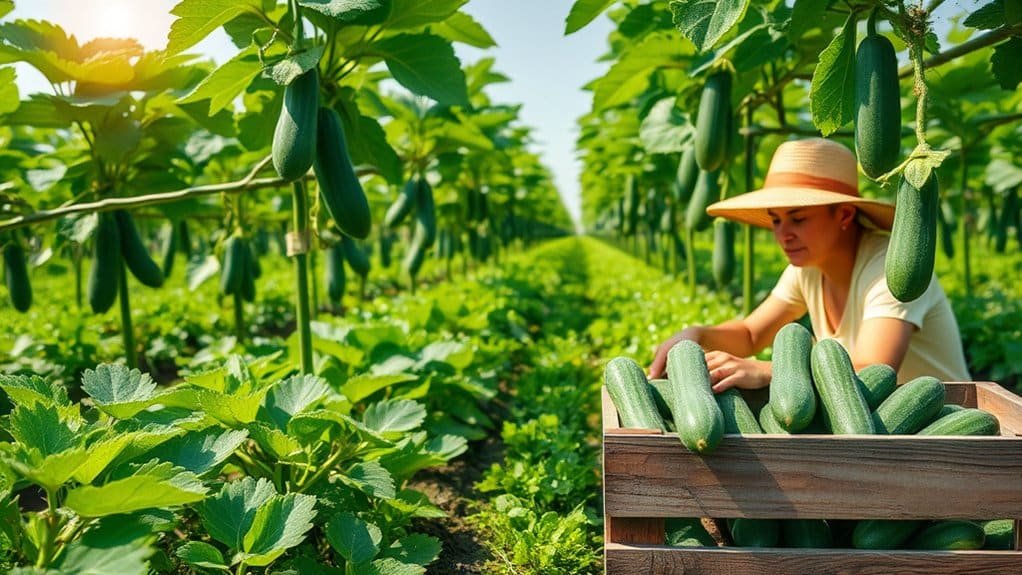

When I grow cucumbers, I focus on rich, well-draining soil enriched with organic matter. Maintaining a pH between 6.0 and 7.5 is crucial. I sow high-quality seed at a depth of 1–2 cm and make sure they have enough space — 30–50 cm apart for in-ground plantings. Watering is important; I provide about 2.5–5 cm per week and monitor moisture closely. Regular pest inspections and crop rotation help keep diseases at bay. Nutrition is also important; I use organic fertilizers during growth. These insights are just the tip of the iceberg for successful cucumber cultivation, and there is much more to learn.
Key Takeaways
- Provide rich, well-draining soil with a mix of grass, coconut fibers and worm castings to encourage healthy cucumber growth.
- Maintain optimal pH levels between 6.0 and 7.5, and keep soil temperatures around 25°C for the best results.
- Water cucumbers weekly with 2–5 cm, using drip irrigation to avoid overhead watering and conserve moisture effectively.
- Monitor nitrogen levels closely and apply organic fertilizers to improve soil fertility and support vigorous plant growth.
- Inspect plants regularly for pests and diseases, and use crop rotation and beneficial insects for effective control.
Soil and Climate Essentials

When it comes to growing cucumbers, the foundation is understanding the essential soil and climate conditions.
I have found that achieving the right soil structure is crucial; cucumbers thrive in rich, well-draining soil enriched with organic matter. Aim for a pH level between 6.5 and 7.5, and mix coarse sand or perlite into the soil to improve drainage. It is vital to avoid waterlogged conditions that can lead to root rot, so regularly adding compost can help maintain soil health.
Equally important is adapting to the climate. Cucumbers do best in warm temperatures, ideally around 25°C during the day and 20°C at night. They need at least 6–8 hours of sunlight daily and a relative humidity of about 70%.
To protect your plants from wind and extreme conditions, choose a sheltered location that provides warmth and light. When preparing the soil you might consider using plastic covers to warm it before planting. Additionally, applying a layer of organic mulch can provide nutrients and retain heat.
For best results, adding a layer of river sand can improve soil drainage, which is crucial to prevent water retention problems that cucumbers dislike.
Sowing Techniques

Effective sowing of cucumber seeds lays the foundation for a successful harvest. I usually start by selecting high-quality seeds, since this directly affects plant health. I sow seeds in early spring, between April and early May, or directly into the ground from mid-May to early June, ensuring the risk of frost is minimal. It is essential to sow outdoors so the plants can thrive in their natural environment.
I use a mix of potting soil and coarse sand, sometimes adding perlite or vermiculite for better drainage. For each 9 cm pot I plant 2–3 seeds at a depth of 1–2 cm, keeping the soil moist but not waterlogged. Placing the pots in a warm spot, ideally at a temperature of at least 20°C, is crucial for germination, which occurs within 7–10 days.
Here is a quick reference table for my sowing techniques:
| Step | Details |
|---|---|
| Seed selection | Choose high-quality seeds |
| Planting depth | 1–2 cm deep |
| Soil mix | Potting soil + coarse sand |
| Germination temperature | Minimum 20°C
Optimal Plant Spacing

After sowing my cucumber seeds, understanding optimal plant spacing becomes essential to maximize growth and yield. The right plant density is crucial. When I plant in the ground, I usually space cucumbers about 30 to 50 cm apart, with rows at least 80 to 100 cm apart. This spacing provides adequate air circulation and minimizes shading that can hamper growth.
For climbing varieties I increase spacing to about 60 cm, whereas for sprawling types I allow about 150 cm. This helps them spread without overcrowding, promoting healthier plants. I also ensure the soil is well-draining and nutritious to support robust growth.
When using pots, I choose containers with a diameter of at least 40 cm so the roots have enough room to grow and thrive.
I also make sure to efficiently use any open spaces, for example by intercropping with fast-growing vegetables such as radishes or lettuce. This not only maximizes my garden space but also increases overall productivity.
Effective Irrigation Practices

Effective irrigation practices are essential for thriving cucumber plants. I’ve learned that cucumbers typically need about 2.5–5 cm of water per week, but this can vary depending on weather and soil type. I usually water every 2–3 days, adjusting for warmer, drier conditions where daily watering may become necessary.
Monitoring soil moisture is crucial; I often use the finger test to check if the soil is dry enough to water. Maintaining consistent soil moisture without waterlogging promotes healthy root development. I find that mulching with organic materials helps retain moisture and regulate temperature effectively. Additionally, consistent watering helps prevent plant stress and contributes to overall plant health.
To avoid disease, I avoid overhead watering and instead prefer drip irrigation systems that deliver water directly to the base of the plants. Deep watering is another technique I use, ensuring water penetrates 15–20 cm into the soil. This encourages roots to grow deeper, making them more drought-resistant.
Fertilization Strategies
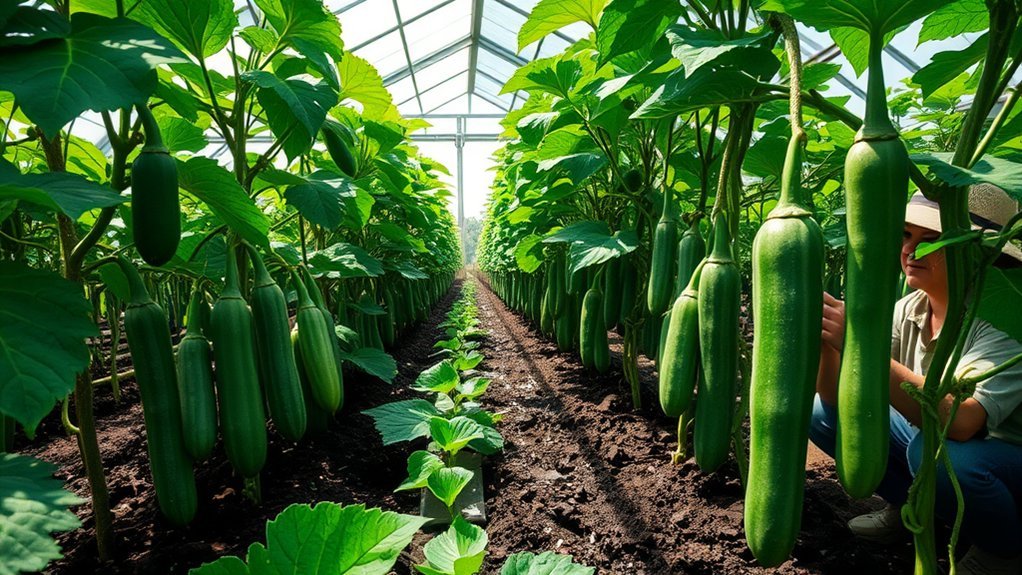
When it comes to fertilizing cucumbers, managing nitrogen levels is crucial for healthy growth and yield. I find that using organic soil enrichment methods, such as composting and incorporating manure, significantly improves soil fertility. It is also important to fertilize plants with liquid nutrients for the best results.
Nitrogen Management Techniques
Nitrogen management techniques are essential for optimizing crop yield while minimizing environmental impacts. I have found that understanding nitrogen sources and timing can greatly affect my cucumber crop.
Here’s how I approach it:
- Assess crop nitrogen needs: Different vegetables have varying nitrogen requirements. For example, a 250 bushel snap bean harvest needs about 30 lb N/acre, while a 30-ton tomato production may require about 200 lb N/acre. It’s essential to match your nitrogen additions to these needs.
- Use organic contributions: I always account for nitrogen supplied by soil organic matter, animal manure and legumes. These sources release nitrogen slowly and can improve soil health, especially when well incorporated. Incorporating strong legume sods can add up to 100 lb N/acre to the soil, enhancing the overall nitrogen supply.
- Time applications wisely: I’ve learned that pre-plant applications can lead to nitrogen losses through leaching. Instead, I prefer applying most nitrogen when crops are actively growing. Side-dressing near the roots allows for better uptake.
Soil Enrichment Methods
Soil enrichment is vital to achieve robust cucumber growth and maximize yields. I’ve discovered that using the right soil amendments and organic fertilizers can make a significant difference in plant health. A balanced mix of ingredients not only increases fertility but also improves soil structure. Here’s a summary of my favorite strategies:
| Soil Component | Purpose |
|---|---|
| Grass | Improved root development |
| Coconut fibers | Enhanced moisture retention |
| Worm castings | Increased soil fertility |
| Biochar | Improved nutrient uptake |
For optimal results I combine 2 parts grass, 1 part coconut fibers and 1 part worm castings. Adding Trichoderma fungi increases plant resilience, while incorporating compost and humic acids raises antioxidant levels in cucumbers. Be sure to dig the soil 18–20 cm deep before planting and keep it evenly moist. Also, larger pots contribute to healthier plants and increased cucumber yields.
Regular feeding four weeks after sowing, with liquid fertilizer or organic granular fertilizer, gives my plants the boost they need. This way I ensure my cucumbers thrive throughout the growing season.
Pest and Disease Control

Effective pest and disease management is crucial for successful cucumber growing, especially when dealing with persistent threats like squash bugs. To combat these pests, I focus on a combination of strategies that include pest identification and organic solutions.
Here are three key practices I rely on:
- Cultural controls: I remove old stems and debris to reduce squash bug populations. Strategically timing my plantings helps plants establish before pests become active, while crop rotation with non-cucurbit crops minimizes disease risk. Additionally, annual crop rotation helps manage pests by disrupting their life cycles.
- Physical barriers: I use floating row covers to protect young plants, though I have to remember to remove them for pollination. Keeping the area around my plants clean prevents hiding places for pests. Also, applying chrysanthemum powder around the plant base can deter ants and other crawling insects, offering a natural pest management approach without harming the ecosystem.
- Biological control: I encourage beneficial insects, such as tachinid flies, which help naturally control squash bugs. Interplanting buckwheat provides food for these beneficial predators.
Additionally, careful pest monitoring and sanitary practices keep my cucumber plants healthy.
Benefits of Mulching

When I mulch my cucumber plants, I notice significant benefits in soil temperature regulation, moisture retention, and weed suppression.
By maintaining consistent moisture levels and moderating soil temperature, I can create an optimal growth environment while minimizing the hassle of weeding. Moreover, using organic mulches improves soil health by releasing essential nutrients as they break down.
These benefits not only foster healthier plants but also streamline my gardening efforts.
Soil Temperature Regulation
Using mulch in your cucumber cultivation can greatly improve soil temperature regulation, providing crucial benefits throughout the growing season.
Mulch acts as an insulating layer, protecting your soil from temperature extremes. Here’s how it helps:
- Reduces heat stress: During hot days mulch can lower soil temperatures by up to 10°C, preventing cucumber roots from being stressed by excessive heat.
- Prevents cold damage: In cooler months a thick layer of mulch keeps temperatures stable, protecting sensitive roots from frost and freezing.
- Promotes microbial activity: Stable soil temperatures encourage beneficial microbial activity, which is essential for nutrient cycling and overall soil health. Additionally, using organic mulch materials like wood chips and leaves can enrich the soil with nutrients while helping maintain cooler soil temperatures.
I have found that organic mulches, such as wood chips and leaves, are particularly effective at keeping soil temperatures cooler.
They prevent extreme temperature fluctuations, which is crucial for optimal growth and nutrient uptake.
Additionally, coarse mulches tend to be more effective than finer ones in regulating soil temperature.
Moisture Retention
Maintaining optimal soil temperature through mulching not only helps regulate temperature extremes but also plays a key role in retaining moisture. I have found that using mulch greatly improves water conservation in my cucumber patch. For example, it reduces evaporation, extends water availability and reduces the need for frequent watering during dry periods. Moreover, applying mulch can also contribute to improving soil structure, which enhances the overall health of the garden.
Here is a quick overview of the benefits:
| Benefit | Description | Mulch Type |
|---|---|---|
| Reduced Evaporation | Keeps soil moist by minimizing water loss | Organic or Inorganic |
| Extended Water Availability | Plants have longer access to water | Organic (e.g., straw) |
| Less Frequent Watering | Reduces the need for regular irrigation | Organic (e.g., bark) |
| Improved Soil Structure | Enhances aeration and fertility over time | Organic (e.g., compost) |
Weed Control
Weeds can be a gardener’s biggest nightmare, but I’ve found that mulching is one of the most effective strategies to keep them away. By blocking sunlight, mulch prevents weed seeds from germinating and can reduce their emergence by up to 90%. It acts as a physical barrier, smothering existing weeds while conserving moisture and nutrients for my plants. Additionally, mulching significantly reduces soil evaporation, ensuring my cucumbers have the moisture they need to thrive.
Here are three key benefits I have observed:
- Natural herbicides: Organic mulch like straw and shredded bark suppresses weeds while enriching the soil as it decomposes, acting as a natural herbicide.
- Companion planting: I often combine mulching with companion planting. For example, using clover as a living mulch competes with weeds for resources and improves the overall health of my garden.
- Reduced maintenance: A thick layer of mulch minimizes competition for nutrients and water, reducing the time I spend weeding so I can focus on caring for my cucumbers.
I recommend applying about 5–8 centimeters of mulch, keeping it away from plant stems. Regular maintenance ensures my garden stays healthy and weed-free, making mulching an essential part of my gardening routine.
Trellising and Support
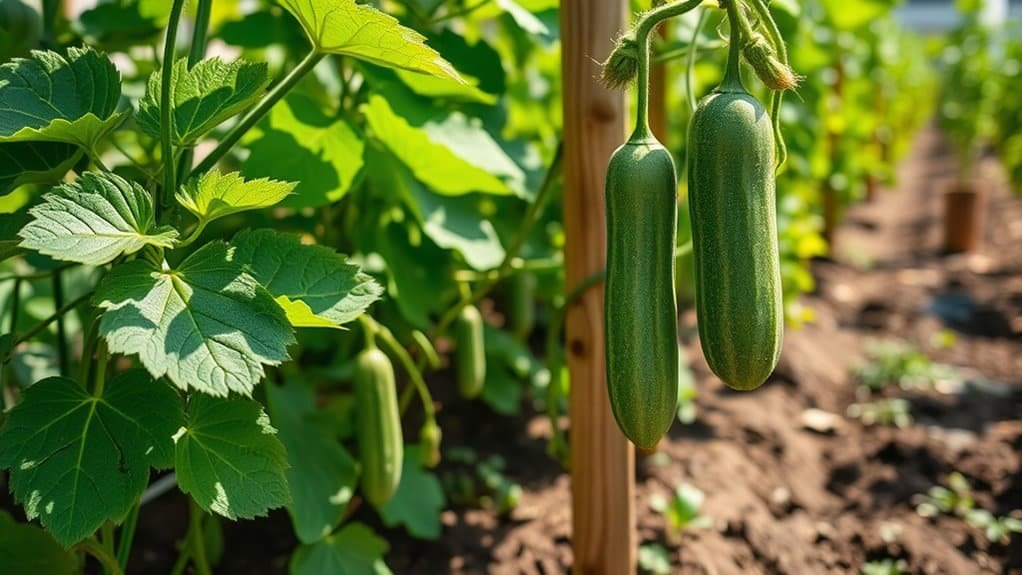
Training cucumbers is a game-changer for maximizing space and improving plant health. By using effective trellis structures and support systems, I can ensure my plants grow upward, which improves air circulation and makes harvesting cucumbers easier. I have experimented with different types of trellises, and here is a quick overview of some options:
| Trellis Type | Description |
|---|---|
| Simple T-post Trellis | T-post, PVC connectors, metal pole, deer netting |
| Chicken Wire Trellis | 10 ft chicken wire bent with metal posts |
| Cattle Panel Trellis | Curved cattle panels over raised beds |
| Bamboo or Stake Trellis | Bamboo poles or stakes for support |
Harvesting Tips

Once I have ensured my cucumbers are well supported on a trellis, it’s time to focus on the harvest process. The right timing is crucial. I usually harvest my cucumbers between July and October when they reach a length of 15–20 cm.
Here are three essential tips for a successful harvest:
- Harvest in the morning: I find that picking cucumbers when it’s cooler helps retain their crispness and freshness.
- Harvest regularly: I make sure to harvest every few days. This not only encourages the plant to produce more fruit but also prevents cucumbers from becoming bitter if left on the vine too long. It’s also important to check regularly during this period to ensure optimal fruit development.
- Use sharp tools: I always use a sharp knife or pruning shears to cut the cucumber from the plant, leaving a short stem attached to the fruit for a clean removal.
Common Growth Mistakes

Common mistakes can often sabotage cucumber cultivation, leading to disappointing yields. One of the most significant errors I’ve encountered is planting too early, which exposes cucumbers to frost that can be fatal.
Another common mistake is planting in shaded areas. Cucumbers need full sun, preferably eight hours a day, to thrive. Shade not only reduces productivity but also increases disease risk.
Problems with overwatering are also common. Cucumbers need consistent moisture, but too much water can lead to stem rot and pest issues. It’s important to check soil drainage to prevent rot and promote healthy root growth.
Balancing soil nutrients is also crucial; a nutrient imbalance can stunt growth and affect yield. I have learned to check my soil pH, aiming for around 6.0. Using organic compost as mulch can help maintain nutrient balance and support vigorous plant growth.
Spacing mistakes are another pitfall. I always ensure plants are properly spaced, typically between 30 and 180 centimeters apart, to improve air circulation and minimize disease.
Finally, ignoring pests can ruin my crops. Regular monitoring and using organic pest control methods help me stay ahead of cucumber beetles and aphids.
Frequently Asked Questions
Which cucumber varieties are best for vegetable gardens?
When choosing cucumbers for my garden, I prefer varieties like Marketmore 76 and Suyo Long. They are resistant to pests and diseases, providing a healthier harvest while allowing me to enjoy crisp, fresh cucumbers throughout the season.
How do I know when cucumbers are ripe?
To determine ripeness, I check color and size. Ripe cucumbers have a dull dark green skin and should be 15–20 centimeters long before cutting. Avoid shiny fruit; they are usually not ripe.
Can cucumbers be grown indoors?
Yes, I have successfully grown cucumbers indoors! With proper care—including sufficient light, warmth and humidity—indoor gardening can produce vigorous plants and delicious fruit. Just ensure you provide enough space and support for growth.
Which companion plants benefit cucumber growth?
I’ve found that cucumber companions like beans and marigolds both enrich the soil and deter garden pests. Incorporating these plants promotes growth and helps create a thriving garden ecosystem.
How can I store harvested cucumbers effectively?
To store harvested cucumbers effectively, I use preservation methods like wrapping them in paper towels and placing them in zip-top bags. I keep them at ideal storage temperatures of 10 to 13°C with high humidity to maintain freshness.
Conclusion
In conclusion, mastering cucumber cultivation requires attention to soil, climate and a few key techniques. By using proper sowing methods, maintaining optimal plant spacing and adopting effective watering and fertilization strategies, you can significantly increase yield. Don’t forget to mulch and provide support for your plants, and you’ll reap the rewards at harvest time. Avoid common mistakes, and with a bit of practice you’ll be on your way to growing healthy, delicious cucumbers. Happy gardening!