

Do you want fresh vegetables from your own garden all year round? Then good timing is everything. Research by Zaaikalender.com shows that 83% of gardeners increase their yield by following monthly sowing recommendations. Whether you start peppers indoors in February or plant winter leeks in October: every crop has its ideal moment.
This article gives you a practical month-by-month overview, based on data from experts like Intratuin. Learn how to:
- Make optimal use of your soil with smart crop rotation
- Protect frost-sensitive plants with simple measures
- Even in cold months you can harvest thanks to early preparation
Did you know that lamb’s lettuce and spinach can already be sown in January? Or that broccoli can keep growing until November with the right care? We show how, with a well-thought-out approach, you can harvest for longer and more varied.
Key insights
- A monthly plan doubles your harvest potential
- Sowing times vary by crop (e.g. peppers from February, carrots from March)
- Cold frames and plant protectors extend the growing season
- Companion planting prevents diseases and improves the soil
- Reliable sources like Zaaikalender.com provide exact dates by postal code area
Introduction to a successful vegetable garden
What if your garden provides tasty harvests every season? The secret lies in two pillars: healthy soil and smart plant selection. Without this foundation, even the best planning won’t work.
Why good planning is essential
Your soil is the foundation. According to research by Intratuin, performance is 70% better in soil with compost. Start by removing weeds and add organic material. Use a digging fork and a rake for aeration.
Choose plants that fit your season. Spinach, for example, already grows at 5°C. Do you plant it in March? Then you harvest in April. This way you avoid disappointment and don’t waste seeds.
Overview of seasons and expected harvest
Each crop has its ideal moment:
- Spring: Leafy greens (spinach, arugula) thrive in cooler soil
- Summer: Tomatoes and peppers require warm conditions
- Autumn: Carrots and brassicas can withstand frost
A simple test: stick your finger into the soil. Does it feel crumbly and moist? Perfect for sowing! With this foundation you create a garden that produces year-round. What are you waiting for?
Monthly planning with the vegetable garden calendar
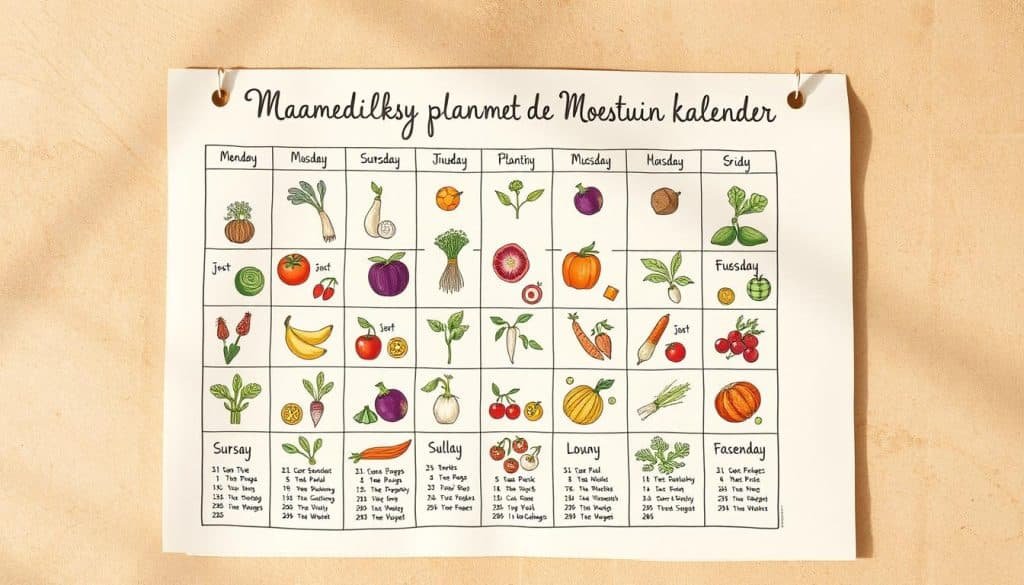
Each month has its own tasks: from sowing to harvesting. With a simple schedule you can work methodically toward a full garden teeming with life. Did you know that Brussels sprouts, for example, need around 200 days? Or that lettuce can be ready in just 4 weeks?
What to sow and when – practical tips
Start with these basics:
| Month | Seeds | Germination time | Harvest |
|---|---|---|---|
| January | Tomatoes (pots) | 7-14 days | June-Sept |
| March | Carrots (open ground) | 10-21 days | July-Oct |
| July | Brussels sprouts | 5-10 days | Oct-Mar |
| November | Leeks (pots) | 14-21 days | May-July |
Do you know why pots are ideal for early sowing? They protect against cold and give control over moisture. Start peppers in February in trays indoors. Use labels to keep an overview – that way you won’t get confused.
Your garden affects the schedule. Sunny spots? Perfect for cucumbers from April. Shady corners? Try spinach or arugula. Don’t forget to prepare your soil with compost for better growth.
3 tips for success:
- Sow small amounts every 2 weeks (this way you have a continuous harvest)
- Combine fast-growing seeds (lettuce) with slow ones (pumpkin)
- Use transparent pots to check root growth
With a monthly rhythm you avoid stress and failed harvests. Start small, learn what works in your area, and expand slowly. Who’s planting radishes next week already?
Step-by-step guidance: Sowing, Pricking out and Hardening off
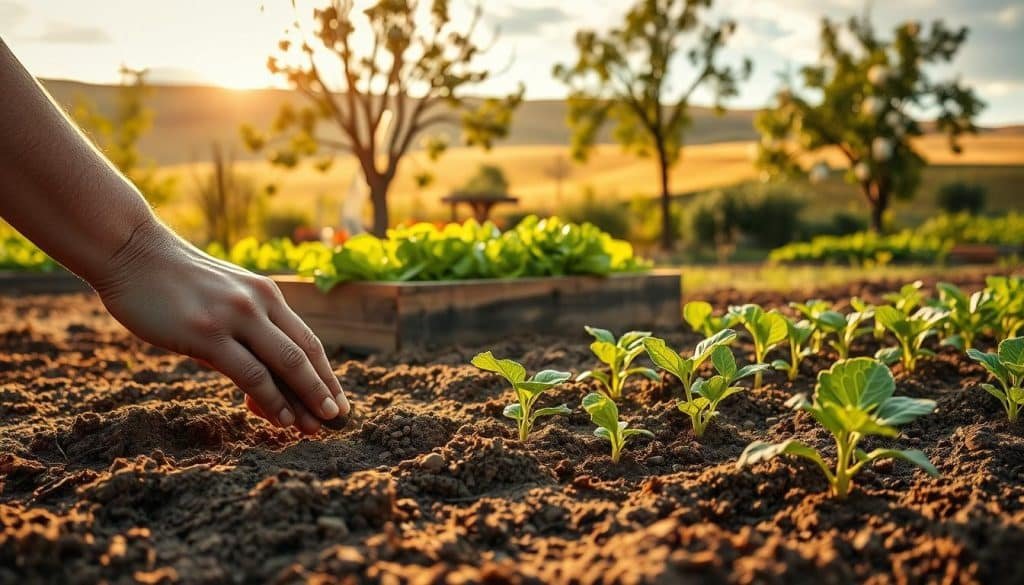
How do you ensure that each seed grows into a strong plant? The answer lies in three crucial steps that even experienced gardeners sometimes overlook. Let’s start with the basics.
The basic principles of sowing
Begin with quality seeds and well-aerated potting soil. For peppers, this works best:
- Fill pots with seed compost (do not press down)
- Place 2 seeds per pot at 0.5 cm depth
- Mist with lukewarm water – never pour!
Tomato seed germinates faster at 20°C. Cover with cling film until the first green appears. For radish mix seeds with sand: this ensures more even sowing. After 10 days you’ll already see results.
Practical tips for pricking out and hardening off
Prick out when seedlings have two true leaves. For tomatoes, cut away the weakest plants. Use a spoon to carefully move the roots.
Hardening off is an art. Start 7 days before planting out:
- Day 1–3: 2 hours outside in the shade
- Day 4–5: 4 hours with morning sun
- Day 6–7: Full day outside
Peppers are sensitive. Protect them with a plant cloche from the wind. For radish you don’t need to harden off – these cold-hardy ones can go straight into the ground!
Pro tip: Use an old toothbrush to distribute seeds evenly. Works perfectly for small seeds like carrots or basil. Which seed will you plant first?
Specific tips for each plant species
Every plant has its own story – discover how to bring spinach and peppers to bloom. Did you know that spinach is ready to harvest after just 45 days? Or that peppers need extra time to ripen? Let’s look by category at what works.
Vegetables and herbs: from spinach to pepper
Spinach is a true spring champion. Sow from March in loose soil, 2 cm deep. Keep 15 cm between the rows. Water daily – within 6 weeks you’ll have tender leaves. For peppers: start early! Begin in February indoors. They need 60-90 days to ripen. Only set them outside when it’s 15°C.
Combine herbs smartly. Basil next to tomatoes? Perfect! But plant mint separately – it spreads quickly. Sow parsley outside directly in April. After 70 days you can harvest. Tip: trim regularly, it will grow bushier.
Root and bulb crops
Carrots require a special trick: mix the seeds with sand for even sowing. Plant them in the spring (March–April) at 1 cm depth. After 75 days you’ll pull up the first sweet carrots. Onions, on the other hand, are best started as sets. Press them into the soil in mid-April 2 cm deep, 10 cm apart.
Winter carrots are patient: sow in June, harvest after 120 days. Pay attention to crop rotation! Don’t plant them where parsnips grew last year. Radishes grow super fast – ideal for beginners. Sow them between slower crops. Within 25 days you’ll have crunchy bulbs.
Experiment with combinations. Leeks next to strawberries? Surprisingly good! But beans and onions are not neighbors. Which duo will you try this spring?
Sustainable and ecological gardening
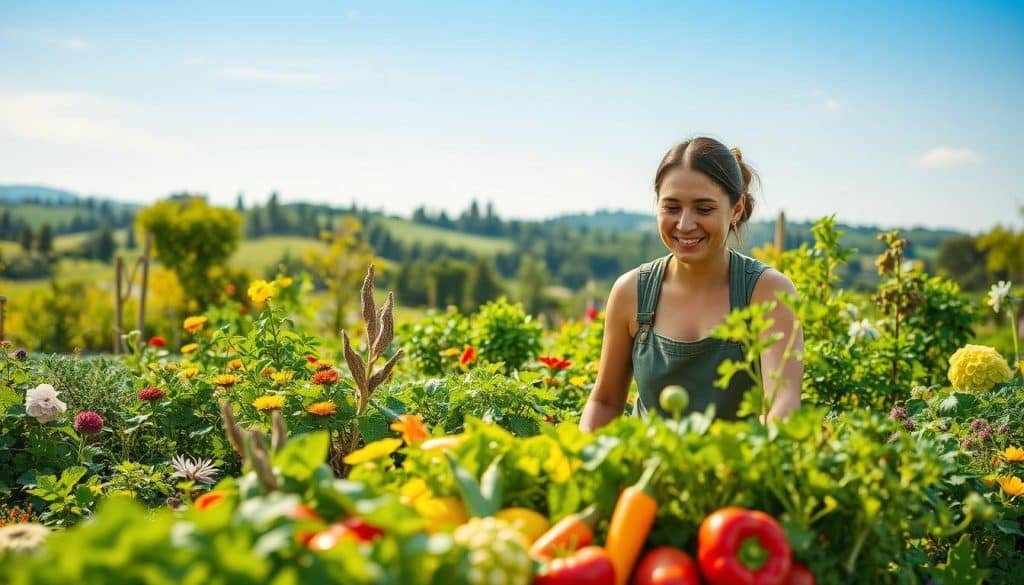
A healthy soil is the foundation for tasty vegetables. By using natural methods, you not only get a greater harvest, but you also help bees and butterflies. Did you know that a layer of wood chips can keep the soil up to 30% more moist?
Natural protection for your plants
Mulching is simple and effective. Use these materials:
| Material | Thickness | Effect |
|---|---|---|
| Grass clippings | 3 cm | Prevents weeds |
| Leaves | 5 cm | Improves soil structure |
| Straw | 7 cm | Protects against frost |
Green manuring gives an extra boost. Sow mustard or clover among your vegetable plants. These plants:
- Release nutrients
- Attract beneficial insects
- Prevent soil depletion
According to experts, it’s best to combine these methods with your sowing schedule. Start with easy varieties such as spinach or chard – perfect for beginners according to this guide.
By mulching you save water and labor. Your soil stays airy, which helps roots grow better. The result? A longer harvest period and healthier vegetables without chemicals. Which natural trick will you try first?
Tools and extra tips for your vegetable garden
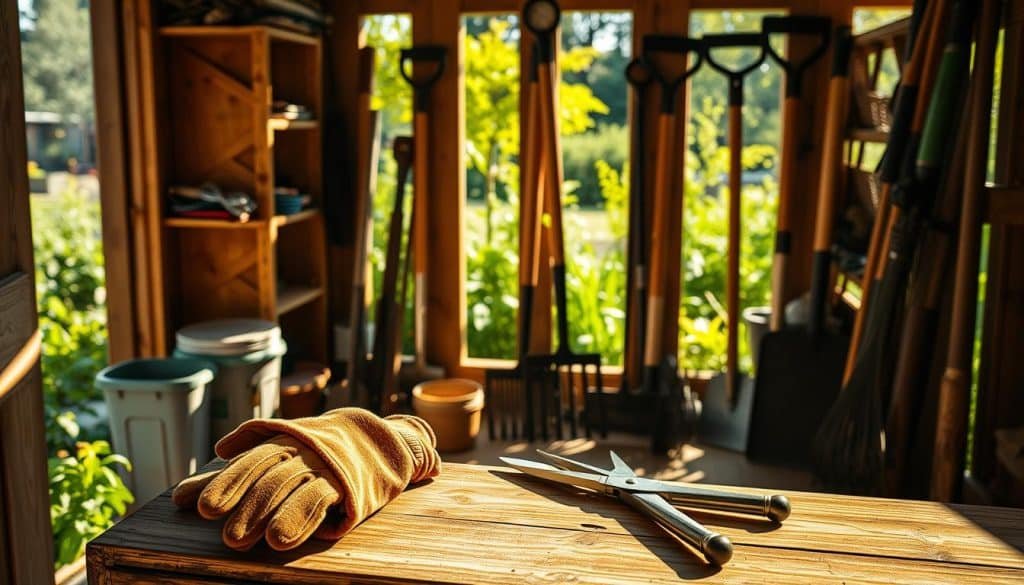
Have you ever mixed up seeds or forgotten to water plants? With the right tools, gardening becomes a breeze. Let’s look at practical solutions that truly work.
Seed storage boxes and smart labels
My favorite is the Aveve storage box with 24 compartments. Perfect for pepper seeds and other valuables. Use colored stickers for each month – that way you can see at a glance what needs to be sown when.
Also try reusable aluminum plant labels. The ones from Intratuin last 5 years! Write on them with a wax crayon: rewritable and rain-resistant.
Watering without hassle
For plants that need extra care, such as lamb’s lettuce, a drip hose works wonders. The Gardena starter kit has adjustable drippers – ideal for delicate crops.
3 must-haves according to experts:
- Fleece plant covers (protect against night frost)
- Seed-starting kit with airy pots (roots breathe better)
- Soil moisture meter (prevent overly wet potting soil)
Did you know that pepper seedlings grow 50% faster with a heated propagator? Or that lamb’s lettuce germinates at 4°C if you use a frost cover? With these tools you’ll get the most out of every seed.
Final tip: the Makkelijke Moestuinmix 40L is worth its weight in gold. This special soil gives seedlings exactly what they need – even tricky lamb’s lettuce becomes a success. Which tool will you try first?
Inspiration and experiences from other vegetable gardeners
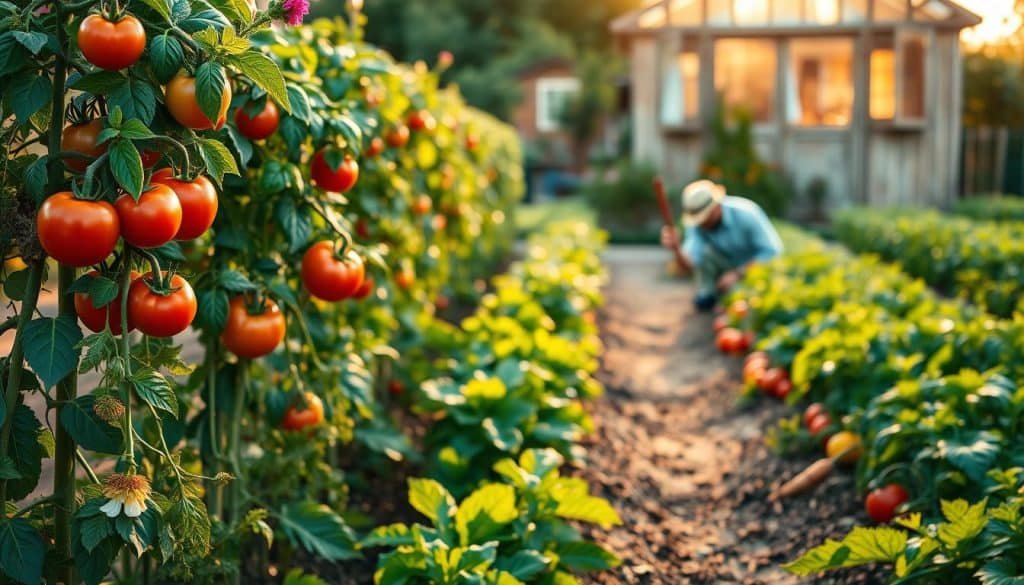
Gardening together makes every harvest tastier. Discover how others make the most of their space – from balcony boxes to allotments. Did you know a Facebook group with 60,000 members exchanges tips daily?
First steps with trial and error
Beginner Monique started on her 2m² balcony: “With a few pots and some seeds I grew lettuce and confidence!” Her secret? 15 minutes of maintenance every week. Now she grows 15 varieties of vegetables.
Creative solutions that work
Experienced gardener Rik shares his clever finds:
| Garden type | Space | Success factor |
|---|---|---|
| Vertical planters | 1m² | 3x more yield |
| Rooftop vegetable garden | 6m² | Extra sunlight |
| Community garden | 100m² | Shared knowledge |
The right month to start turns out to be crucial. Sylvie proves it: “On my north-facing balcony I’ve been growing radishes since April by starting earlier in pots.”
3 tips from the community:
- Combine varieties that help each other (beans + strawberries)
- Use vertical space for climbing plants
- Share a few plants with neighbors – good for social contact and diversity
What will you try first? An herb tower made from pallets? Or that shared community garden?
Conclusion
With the right timing you can enjoy homegrown vegetables for twelve months. A well-thought-out plan doubles your harvest, protects plants from frost and ensures variety on your plate. Think of onions in spring or broad beans in summer – every crop has its ideal moment.
Start today! Use a handy sowing planner so you never miss crucial dates again. That way you can combine fast-growing lettuce with slow pumpkins for a continuous harvest. Remember: healthy soil and regular maintenance make the difference.
Share your experiences with other gardeners – what worked well? What challenges did you encounter? Try something new this year: grow onions between carrots or sow broad beans as a natural soil improver. Every step, however small, brings you closer to a productive garden.
Grab your spade and give those seeds a chance. Before you know it, you’ll be picking fresh herbs at breakfast and crisp vegetables at dinner. Which tasty experiment will you start this week?
FAQ
When is the best time to sow spinach?
Spinach is best sown in early spring (March) or late summer (August). Choose a spot with loose soil and partial shade. Note: in warm weather it bolts quickly. Corn salad is a good alternative for autumn!
How do I protect peppers from the cold?
Chili and bell peppers like warmth. Start seeds in pots indoors (February/March). Use a heated propagator or only place them outside after mid-May. A plant cover from Fleur & Wouter works well against night frost!
Why do my radishes sometimes fail?
Radishes grow quickly but become tough in dry conditions. Keep the soil moist and thin the seedlings in time. Don’t sow too deep — 1 cm is enough. Try the variety ‘Ronde Rood Witte Punt’ for a better yield.
Can I sow broad beans directly in the open ground?
Yes! Broad beans can be sown directly into the soil from February. Plant them 5 cm deep and 15 cm apart. Use a stake against wind. Tip: grow them together with dill to prevent black bean aphids.
What is mulching and why does it help?
Mulching is covering the soil with straw, leaves or grass. It retains moisture, suppresses weeds and improves the soil. Perfect for vegetables like courgettes! Do not use fresh grass — it attracts slugs.
How should I store seeds?
Use airtight seed storage boxes from brands like Buzzy Seeds. Store them cool, dark and dry. Write the date and variety on a plant label. Tomato seeds stay viable for 4–6 years, onions only 1–2 years.
Which vegetables suit each other in a small garden?
Combine low-growing types such as radish with climbers like runner beans. Chard and herbs like basil do well in pots. Avoid large space-hoggers like pumpkin if you have limited room.
How do I get started without expensive tools?
Use egg cartons as seed trays and old whisks as plant supports. For irrigation: poke holes in a plastic bottle. The Moestuinmeisjes have great DIY tips on their blog. Really, you don’t need expensive tools!