
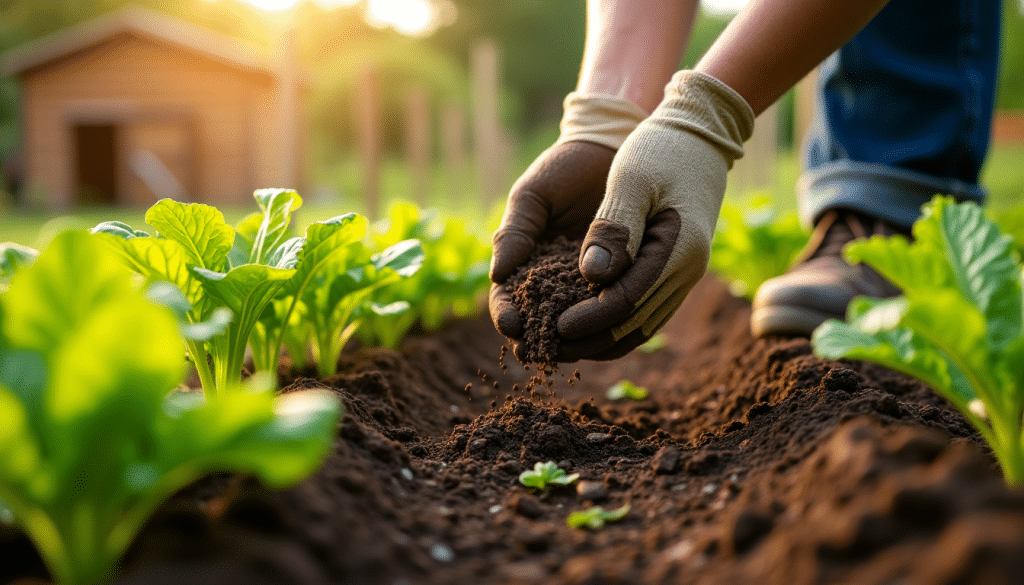

Fertilizing your vegetable garden can make the difference between a poor and an abundant harvest. Over the years I have discovered that fertilizing the vegetable garden forms the basis for successful vegetable cultivation.
Many gardeners struggle with the same questions I once had: when should you fertilize, how much manure should you use, and which type of fertilizer works best? The key lies in understanding the three essential nutrients – nitrogen, phosphorus and potassium. These building blocks ensure healthy plant growth, but timing and method are crucial.
From my experience, fertilizing twice a year is ideal for most vegetable gardens. In this calendar I share my knowledge about the best fertilizers and about creating a fertile soil that feeds your plants optimally.
I prefer organic fertilizers because they release nutrients slowly. They strengthen the soil life and provide a healthier vegetable garden in the long term. Remember that patience pays off when building rich soil – it is an investment that yields returns for years in the form of healthy, flavorful vegetables.
The Basics of Vegetable Garden Fertilization
From my experience, plants in your vegetable garden need more than just water and sunlight. They require specific nutrients to grow healthily and produce a rich harvest. Over the years I’ve learned which building blocks are essential:
- Nitrogen (N): promotes the growth of stems and leaves
- Phosphorus (P): stimulates root growth and flowering
- Potassium (K): ensures firm fruits and increases plant resilience
- Magnesium (Mg): gives a deep green leaf color [1]
I have found that understanding fertilizer labels is crucial. You often see NPK values such as 6-3-12, which means: 6% nitrogen, 3% phosphorus and 12% potassium [1]. This knowledge helps me make the right choices for my plants.
Although you can choose between synthetic fertilizer and organic manure, I prefer organic fertilizers. They are made from plant and animal materials and release nutrients slowly as soil organisms break them down [1].
The benefits of organic fertilization have become clear to me. It not only improves soil structure but also stimulates soil life and helps the soil retain water and nutrients [2]. Synthetic fertilizer, on the other hand, despite precise NPK ratios, can be harmful to insects and groundwater when overused [1].
I have noticed that soil becomes depleted when you garden in the same spot for years. Regular fertilization is therefore necessary [3]. With the right fertilization approach you not only create fertile soil but also help your plants build resistance to diseases and pests [3]. Don’t forget that healthy soil forms the foundation for a thriving vegetable garden!
Seasonal Fertilization Calendar
From years of gardening I have learned that a well-planned fertilization schedule is essential for a flourishing vegetable garden. The first crucial fertilization round starts in spring, when daytime soil temperatures rise above 10 degrees [4]. I usually begin in March or April, exactly when my plants awaken from their winter dormancy and are hungry for nutrients.
I prefer organic fertilizers for spring feeding. These continue to work for about three to four months [5], which fits perfectly with my plants’ growth rhythm. Once June or July arrives, I notice that a summer fertilization is needed because the initial nutrients have been used up. Note: during hot, dry periods I am extra cautious with synthetic fertilizers — I’ve learned that they can burn the plants [4].
The autumn fertilization, which I apply between late August and October, is crucial for getting the garden ready for winter [4]. From experience, a higher potassium level makes my plants more resilient to winter cold and diseases. Additional magnesium and iron also provide a nice deep green color during the winter months [4].
For optimal results I use these guidelines per crop type (per 10 m²) [2]:
- Fruiting vegetables (tomatoes, cucumbers): 0.8 – 1.2 kg
- Root and tuber crops: 0.8 – 1.2 kg
- Leafy vegetables (lettuce, spinach): 0.6 – 1.0 kg
- Herbs: 0.4 – 0.6 kg
I always spread the fertilizer evenly around my plants and lightly rake it into the top layer of soil [5]. During the winter months I skip fertilization — the plants are then dormant and don’t need extra nourishment [4]. Remember that consistency and timing in fertilization are just as important as the amount you use!
Fertilization techniques by crop type
Through tending different crops I’ve discovered that each plant type has its own nutritional needs. Fruiting vegetables like tomatoes, cucumbers and peppers are real gluttons in my garden. They require extra feeding, especially during fruit set [6]. From experience, these vegetables thrive best with potassium-rich fertilizer — this produces firm fruits and a delicious flavor [7].
Root crops have taught me to be more modest with fertilization. They mainly need potassium and phosphorus for good development [8]. I always loosen the soil deeply for optimal growth. An important lesson I’ve learned: never plant these crops on freshly manured ground [8].
With leafy vegetables like lettuce and spinach I aim for even fertilization. These vegetables require 0.6 to 1.0 kg of manure per 10 m² [2]. I’ve noticed they respond beautifully to nitrogen-rich feeding – it gives them exactly the healthy leaf growth I strive for.
Small fruits require special attention in my garden. Strawberries and berries thrive with potassium-rich fertilizer, which ensures an abundant harvest and flavorful fruits [6]. Remember that these crops are sensitive to high salt concentrations – a lesson I learned the hard way [9].
For all crops in my garden I choose organic fertilizers. They release their nutrients gradually over about 100 days [2]. What I like most is that they stimulate soil life and improve soil structure. This ensures my plants can absorb nutrients better [2]. Patience really pays off when working with organic fertilizers!
Conclusion
Through years of experimenting with fertilization I’ve discovered that a healthy vegetable garden starts with the right nutrition. This seasonal calendar has helped me understand exactly when and how to feed my plants for the best results.
I always prefer organic fertilizers for a sustainable garden. They not only release nutrients slowly, but also improve the soil structure and stimulate soil life – something I find crucial for healthy growth.
From my experience, timing is essential. I start in spring with a good base fertilization, followed by targeted supplementary feeding in the summer. The potassium-rich autumn fertilization makes my crops winter-hardy. This approach has yielded a rich harvest for me year after year.
The most wonderful thing I’ve learned is how different crops can be. My tomatoes and cucumbers are real gluttons that demand a lot of nutrients, while root crops are more modest. Leafy greens, on the other hand, thrive with nitrogen-rich fertilizer. With this knowledge I can give each crop exactly what it needs.
Don’t forget that patience pays off when building fertile soil. With these insights you can confidently start fertilizing your vegetable garden. After all, healthy soil is the key to an abundant harvest year-round!
FAQs
Q1. When is the best time to fertilize my vegetable garden?
It’s ideal to fertilize your vegetable garden twice a year: in spring (March/April) and in autumn. Spring fertilization is crucial because plants then wake from their winter dormancy and need nutrients for vigorous growth.
Q2. How often should I add fertilizer during the growing season?
For most vegetables it is recommended to apply a balanced fertilizer every three to four weeks during the growing season. Keep fertilizing even when fruit appears to ensure continuous production.
Q3. Which crops can I sow in my vegetable garden in March?
March is a good month to sow several crops, including lettuce, carrots, beets, leeks, and radishes. These vegetables grow well in the Dutch climate and can get an early start in your vegetable garden.
Q4. What is the best fertilizer for my vegetable garden?
Organic fertilizers are generally the best choice for your vegetable garden. Compost, manure, and natural fertilizers with the correct NPK ratio (nitrogen, phosphorus, potassium) are ideal. These fertilizers feed your plants gradually and improve soil structure.
Q5. How do I adjust fertilization for different types of vegetables?
Different vegetables have varying nutrient needs. Fruit vegetables like tomatoes require more nutrients than root crops. Leafy greens thrive with nitrogen-rich fertilizer. Adjust your fertilization plan based on the specific needs of your crops for optimal results.
References
[1] – https://www.petsplace.nl/advies/moestuin-bemesten/
[2] – https://dcm-info.be/nl/hobby/tuintips/de-moestuin-bemesten-zo-voed-je-een-rijke-oogst
[3] – https://moowy.be/moestuin-bemesten/
[4] – https://www.gazonexpert.be/nl/longreads/bemesten-let-op-voor-verbranding
[5] – https://ecostyle.nl/pages/moestuin-bemesten
[6] – https://www.vtwonen.be/tuinieren/moestuin-bemesten-met-deze-voedzame-tips-smul-je-van-groenten-uit-eigen-tuin~64cc0c9
[7] – https://moesmeisje.nl/moestuin-bemesten/
[8] – https://www.nmew.nl/wortelgewassen
[9] – https://mergenmetz.nl/blog/notities/basiskennis/plan/bemestingsplan/